Sirkulær bioøkonomi i praksis: Bruk av marine restråstoff i gjødsel2026-05-27
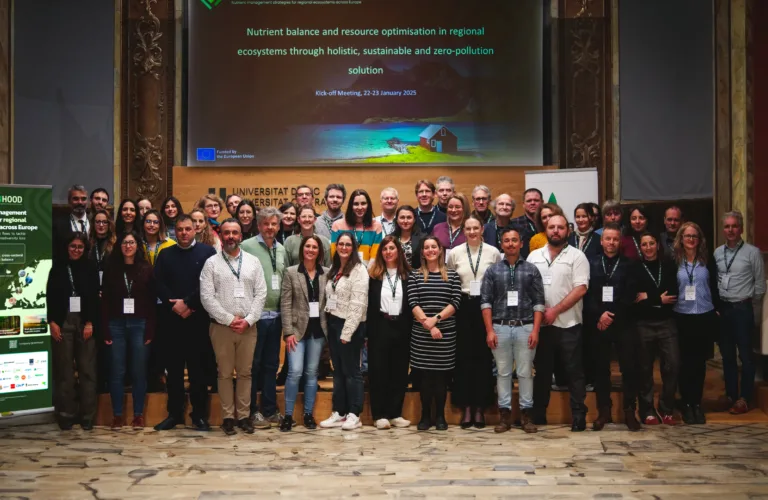
Greenhood: Med Trøndelag som norsk eksempel skal dette EU-prosjektet redusere overskuddet av N og P fra landbruk og akvakultur.
Circulizer: Målet er å undersøke hvordan fiskeslam kan bli til verdifull gjødsel og klimanøytral energi, samtidig som vi verner miljøet.
Long-term organic grassland management and soil fertility under climate change in Norway2026
Implications
Organic farming is promoted in Nordic agricultural policy as a key pathway toward resilient food systems, with grass–clover leys forming the backbone of organic livestock production.
However, under northern conditions characterized by short growing seasons, high precipitation, and increasing climate variability, long-term soil fertility and yield stability cannot be assumed. Our results highlight the need for policy frameworks to place stronger emphasis on sustainable nutrient management, including phosphorus recycling, improved nutrient-use efficiency, and long-term monitoring to prevent gradual soil nutrient depletion and to ensure that organic farming effectively supports climate adaptation, food security, and environmental sustainability in the Nordic region.
Background and objectives
Nordic food systems face increasing pressure from climate change, nutrient constraints, and the need to reduce dependence on external inputs while maintaining productivity. Cold temperatures, short growing seasons, and high precipitation limit nutrient mineralisation and crop growth, posing particular challenges for organic farming systems in the region.
Grass–clover leys are central to Nordic organic livestock systems and are often promoted in international policy frameworks as a solution to improve soil health, enhance nutrient cycling, and increase system resilience. However, there is limited long-term evidence on whether these systems can sustain soil fertility and yields under Nordic conditions without compromising productivity. The objective of this study was to evaluate long-term changes in soil organic matter, nutrient status, and grass–clover ley productivity following conversion to organic management in a Norwegian milk production system. By combining multi-decadal soil monitoring, yield records, and farm-gate nutrient budgets, this study provides relevant evidence for the design of resilient organic farming policies in northern regions.
Key results and discussion
Over the 30-year study period, mean annual air temperature increased by approximately 0.05 °C yr⁻¹. During the same period, expansion of the cattle herd led to a less diverse crop rotation, with a greater emphasis on grass–clover silage production and grazing. Yields declined in the first and second cuts by approximately 61 and 19 kg DM ha⁻¹ yr⁻¹, respectively. Estimated biological nitrogen fixation varied widely, ranging from 7–82 kg N ha⁻¹ yr⁻¹ in the first cut and 3–71 kg N ha⁻¹ yr⁻¹ in the second cut, with a mean annual total of about 49 kg N ha⁻¹, well below reported European grassland values (100–380 kg N ha⁻¹ yr⁻¹). Overall, topsoil (0–20 cm) soil organic matter declined from 10.3% to 7.8%, particularly in fields with high initial SOM, reflecting historic land-use change, drainage, regular ploughing (every ~5 years), and climate warming. Concurrently, long-term organic management led to declining soil phosphorus and potassium reserves, with topsoil P-AL values in 2021 ranging from 23 to 182 mg P kg⁻¹ soil, and few fields falling below the critical threshold of 40 mg P kg⁻¹. Declining soil fertility was associated with reduced grass–clover dry matter yields, indicating that long-term productivity may be constrained without targeted nutrient management strategies. These findings challenge the assumption that grass–clover leys inherently maintain soil fertility over time in Nordic organic systems and underscore the importance of adapting management practices to local climatic and environmental conditions.
References Zethof, J. H. et al. Evaluating trends in yield and soil quality over 30 years of organically managed grass-clover ley in Norway. Org. Agr. (2026) 16:8. https://doi.org/10.1007/s13165-025-00538-0
Application of anaerobically digested cattle slurry and changes in SOM content and composition in organically managed grass-clover ley in Norway2026
Organically managed grass-clover leys are often claimed to improve soil quality and are considered as a cornerstone of sustainable agricultural practice. However, our earlier results from an organically managed farm in Tingvoll (NW Norway) demonstrated soil organic matter (SOM) content declined over the 35 years following the adoption of organic management, in parallel with increase in temperature and decrease in phosphor availability. In 2011, a field experiment was established on part of the grass-clover ley to study the effects of anaerobic digestion of dairy cattle slurry, i.e. waste product of a biogas reactor, on crop yield and soil characteristics. Slurry application, both treated and untreated, was normalized on the nitrogen content. As part of the global C-arouNd consortium, which aims to investigate how short- and long-term agricultural management practices affect SOM persistence, we are investigating how the long-term slurry applications have affected that and other nutrients.
Since spring 2024, greenhouse gas emissions were recorded and plant material and soil were sampled. Preliminary results showed a higher SOM concentration with slurry application compared to the control, whereby anaerobic digested slurry let to significantly higher carbon and nitrogen contents in the soil than untreated slurry and unamended soil
More detailed analysis of the soil, using an advanced density-thermal fractionation protocol, should give more insight into the long-term persistence of SOM. We expect that by first separating the Particulate from Mineral-Associated OM we will find better a more thermally stable Mineral-Associated OM fraction under anaerobically digested slurry application, highlighting changes in SOM composition.
The use of cover crops to enhance climate-resilient in potato farming systems2026
Implications
Cover crops are recognized for their ability to improve soil structure. Northern regions are expected to see more heavy rainfall under climate change, worsening soil erosion and compaction. Under these conditions, cover crops may serve as an effective tool to protect soils and enhancing soil infiltration. However, the short growing season in Nordic countries
may limit the full development of cover crops before winter, potentially reducing their benefits.
Background and objectives
Cover crops are a promising strategy to improve soil health and resilience, but their establishment under Norway’s short growing season is poorly quantified. In potato systems, they can be sown during the preceding crop’s growth or after early harvested potatoes. Knowledge is limited to which species are best suited to Nordic conditions and their effects on soil structure. This study evaluated the aboveground biomass of three cover crop species, oilseed radish, Italian ryegrass, and oats, under real farm conditions in two major potato-growing regions and assessed their impact on soil structure.
Key results and discussion
Cover crop aboveground biomass production varied substantially among species, years, and production systems. Italian ryegrass consistently produced the greatest autumn biomass, averaging 739 kg DM ha⁻¹ in 2024 and 1,167 kg DM ha⁻¹ in 2025 in late potato systems, and 832 kg DM ha⁻¹ in 2024 but only 24 kg DM ha⁻¹ in 2025 in early potato systems. Delayed sowing time was the primary factor explaining the low Italian ryegrass biomass observed in 2025. Oilseed radish and oats produced lower aboveground biomass than Italian ryegrass, with mean values of 180 kg DM ha⁻¹ in 2024 and 640 kg DM ha⁻¹ in 2025 for oilseed radish, and 290 kg DM ha⁻¹ in 2024 for oats. The establishment of oilseed radish and oat was more variable than for Italian ryegrass. Soil structure was assessed using the Visual Evaluation of Soil Structure (VESS) method in Italian ryegrass fields during spring and autumn. Spring assessments, conducted after winter and prior to cover crop termination, indicated minimal differences in soil structure between plots with and without Italian ryegrass in both potato systems. In autumn, when Italian ryegrass reached its highest growth potential, soils in the ryegrass plots were classified as having good structure, characterized by soil lumps easily broken by hand and consisting of small, rounded aggregates. In contrast, control plots without cover crops exhibited moderate soil structure, with aggregates hard to break by hand and with a mixture of rounded aggregates of varying sizes and the presence of some angular, less porous clods that may restrict root growth. Well-developed soil structure supports climate resilience, as it enhances water infiltration, root penetration, and resistance to compaction under increasingly frequency of heavy rainfall events.
Evaluating trends in yield and soil quality over 30 years of organically managed grass-clover ley in Norway2025-12-29
Abstract Organically managed grass-clover leys are often claimed to improve soil quality and are considered as a cornerstone of sustainable agricultural practice. However, we lack long-term data to understand the effects of long-term organic management on soil quality and farm productivity. Therefore, in this study we evaluated soil organic matter (SOM) and nutrient status in relation to grass-clover ley yields after converting a ruminant feed farm to organic management. At Tingvoll research farm, organic milk production was established in 1989, replacing the previous conventional sheep farming. Records of purchased and sold materials and products were applied to calculate annual farm gate nutrient budgets. Since 1990, composite soil samples (0–20 cm depth) have been taken every 5–7 years for determination of SOM, pH, and soil nutrient status. On several fields, ley yields have been recorded annually. The mean air temperature increased during 1991–2021, while SOM concentration in the cultivated fields decreased overall from 10.3% to 7.8%, especially in soil with high initial SOM concentration. We observed a sharp decline in extractable phosphorus (P) following the conversion to organic farming, reflecting the changes in the farm nutrient budget. These shifts contributed to reduced dry matter yield of the grass-clover ley. Overall, the findings highlight long-term changes in soil fertility and ley productivity after the conversion to organic management, and the system capacity to sustain production while adapting to climatic and management challenges.
Få fosforet i omløp2025-12-20
Felling av struvitt i kloakkanlegg kan fjerne mye av fosforet som ødelegger Oslofjorden. Struvitten inneholder N, P og Mg som bør komme jordbruksjorda til gode. Det er jo derfra
mineralene kommer!
Produksjonsmangfold og jordhelse på Reppe Søndre2025-11-27
Reppe Søndre fremstår som et bynært, allsidig, inkluderende økologisk gårdsbruk. De samarbeider med ulike mennesker i nærmiljøet om andelslandbruk, kafedrift og gårdsdrifta. Korn, kjøtt, egg og grønnsaker produseres og selges lokalt. De integrerer husdyr i vekstskiftet, har underkultur i korn og grønnsaker, grønngjødsel, overflatekompostering og grunn pløying for å lykkes med agronomien.
The fate of cover crop carbon inputs in a Norwegian soil2025-11-17
Contributors:
Teresa G. Barcena,
Tatiana Francischinelli Rittl, Eva Farkas, Daniel Rasse, Christophe Moni, Cédric Plessis, Loiuse Malot, Helge Rainer Meissner, Trond Maukon Henriksen, Randi Berland Frøseth
Background and aims Cover crops are an important measure for carbon (C) sequestration in agriculture. However, little is known about the potential of cover crops to increase C under Nordic conditions and the efficiency of this measure over time. Here, we quantify the potential contribution of different cover crops to soil organic carbon (SOC) and organic matter fractions, and study how this is affected by the origin of the C input (aboveground or belowground residues). Methods We conducted a 13 CO 2 pulse-labelling experiment during the growing season of four cover crops adapted to Nordic conditions, representing different plant functional types. The assimilated 13 C was traced in soil during the following two years. We investigated the fate of cover crop C in two organic matter fractions, Particulate Organic Matter (POM) and Mineral-Associated Organic Matter (MAOM), known to have different persistence in soil. Results Carbon derived from aboveground residues decayed two to three times faster as compared to belowground C. Belowground C inputs were similar among cover crops despite their contrasting root traits and differences in root biomass C. Rhizodeposited-C was consistently the largest belowground C input. Cover crop species affected the quantity of POM-C and MAOM-C, but MAOM-C was preferentially formed from belowground C (ranging from 0.63 ± 0.2 to 0.25 ± 0.1 Mg MAOM-C ha −1 across different cover crops), regardless of the species. Conclusions Cover crop species that can combine large belowground biomass production with root traits that promote physical and physico-chemical protection of OM will contribute most effectively to the long-term SOC pool. These aspects need to be balanced with considerations related to agricultural management.
On-farm assessment of cover crops in carrot and potato production under Norwegian conditions2025-10-06
To support a 50% increase in domestic vegetable production by 2035, Norway's potato and carrot value chains are exploring more sustainable cropping practices. Cover crops have emerged as a promising strategy to improve soil health and resilience, yet their establishment and effectiveness under Norway’s short growing season remain poorly understood. In this on-farm study, three cover crop species—oilseed radish, Italian ryegrass, and oats—were sown in late spring/summer (2024) across two key carrot and potato growing regions. Oilseed radish and oats showed poor establishment and produced negligible biomass before winter. In contrast, Italian ryegrass established successfully, producing autumn biomass yields ranging from 520 to 1320 kg DM ha⁻¹. Preliminary assessments in the following spring (2025) indicated trends toward improved biological soil indicators in cover-cropped plots, though effects were not statistically significant. Soil chemical and physical properties showed minimal change. Final evaluations of carrot and potato yield and quality are planned for late summer and autumn. These findings contribute to identifying cover crops with potential to enhance soil health and crop performance under real farm conditions in northern climates.
Recycling marine residues: Field results from blue-green fertilizer trials2025-10-06
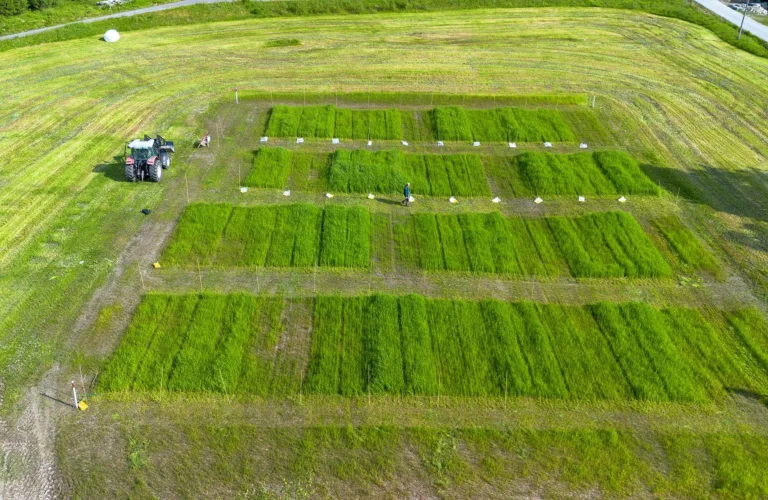
The Circulizer and Greenhood projects explore innovative ways to transform marine residues, such as fish sludge (FS), into renewable energy and sustainable fertilizers. Two field trials were established to evaluate the effects of five blue-green fertilizers on grass yield and quality: cattle slurry (CS), non-digested FS + CS (1:9), anaerobically digested (AD) FS + CS, the liquid fraction of separated AD, and an N-enriched version of the liquid fraction. First-year results (2024) showed that fertilizers containing marine residues were rich in phosphorus (P) and zinc (Zn), which may limit their application rates on agricultural land. Anaerobic digestion improved nitrogen (N) use efficiency, leading to higher yields and greater N (protein) uptake. Replacing mineral fertilizers with blue-green alternatives resulted in comparable yield and protein levels, highlighting their potential in sustainable agriculture. Results from 2025 will be available in the meeting.
Fangvekster: klimaeffekt og dyrkingsstrategier2025-09-25
Contributors:
Trond Maukon Henriksen, Teresa G. Barcena, Kari Bysveen, Thomas Cottis, Peter Dörsch, Eva Farkas, Sigrid Trier Kjær, Thomas Kätterer, Christophe Moni, Daniel Rasse,
Tatiana Francischinelli Rittl, Svein Øivind Solberg, Ievina Sturite, Randi Berland Frøseth
Rapporten sammenfatter resultater fra prosjektet “Fangvekster som klimatiltak i norsk kornproduksjon” (CAPTURE), gjennomført i 2021−2025. Målet med prosjektet var å dokumentere klimaeffekten av fangvekster på kornarealer i Norge, samt å utvikle gode dyrkingsstrategier. Rapporten presenterer dokumentasjon på mengde og variasjon i fangveksters biomasseproduksjon, bidrag til karbonfangst og lagring, utslipp av lystgass og evne til å holde på nitrat i jorda, samt en syntese av dette som kunnskapsgrunnlag for å kunne vurdere klimaeffekten av fangvekster under norske forhold.
The potential of anaerobic digested slurry to reduce the long-term trend of soil organic matter decline in organically managed grass-clover ley in Norway2025-09-18
In cultivated grasslands, such as perennial grass-clover leys, the nutrient cycle encompasses an accumulation phase, followed by a rapid decomposition after ley termination. Upon ploughing the grass-clover ley, increased mineralization releases nutrients, benefiting the re-establishment of a new ley. With the ploughing and subsequent mineralization, carbon sequestered during the accumulation phase is (partly) lost. It is not well studied and understood how this leads to carbon stocks on the long-term and affect overall GHG emissions during a full growth cycle.
As part of the global C-ArouNd consortium, which aims to investigate how short and long-term agricultural management practices affect soil organic matter (SOM) persistence in the soil profile, we are investigating how changes in SOM content affect the soil nutrient status and SOM composition in the long term. We focus our work on the organically managed research farm (Tingvoll gård) in West Norway.
At Tingvoll gård, organic milk production was established in 1986, replacing the previous conventional sheep farming. Climatic data showed a constant increase in temperature over time, whereby the increase in growing season let to a shift from 2 to 3 grass cuttings over the past decade. Historical soil data, collected since 1990, showed a steady decline in SOM, independent of initial SOM content. Additionally, we observed a sharp decline in ammonium-acetate lactate soluble phosphorus after conversion to organic farming in the first two decades (1990-2009), but stabilized since then.
In 2011 a field experiment was established on part of the grass-clover ley to study the effects of anaerobic digested slurry from diary cows on crop and soil characteristics. Slurry application was normalized on the nitrogen content, meaning less carbon was added by the anaerobic digested slurry application. Since spring 2024 we started with GHG emission measurements and collected grass-clover and soil samples for a more in-depth analysis. Preliminary results showed a clearly higher SOM content with slurry application, whereby anaerobic digested slurry let to significantly higher carbon and nitrogen contents as compared to the control. Enzymatic activities, such as Cellulase, were lower under both slurry treatments compared to the control.
Overall, we expect that with the use of anaerobic digested slurry, containing more stable organic compounds, GHG emissions will be reduced, leading to smaller SOM losses.
Soil Organic Matter persistence treated with different slurries under future precipitation2025-09-18
Key to develop future agricultural practices in the light of climate change is understanding SOM persistence under different influences. In Norway, a field experiment was established in 2011 to study the effects of anaerobically digested cattle slurry (ADS) and undigested cattle slurry (UDS) on soil characteristics and greenhouse gas emissions. This study investigates the effects of the different slurries on SOM persistence under two precipitation scenarios using a column experiment under controlled conditions. UDS is rich in labile, while ADS from biogas production contains more stable organic carbon. We hypothesize that ADS application will result in higher SOM persistence as evidenced by a higher proportion of C associated in the mineral-associated organic matter (MAOM), thermal stable fractions and lower dissolved organic carbon and less greenhouse gas emissions compared to UDS application. Additionally, we anticipate that future precipitation scenarios, characterized by increased rainfall intensity, will lead to enhanced carbon leaching and higher greenhouse gas emissions, with a shift towards CH₄ and N₂O dominance, compared to the historical precipitation scenario.
The soil for this study was sampled from a forested area near the Norwegian Centre for Organic Agriculture (NORSØK) in Tingvoll, West Norway. The historical precipitation scenario is based on 28 years of climate data. The future precipitation scenario is predicted by the CMIP6 model for high-emission scenarios (Shared Socioeconomic Pathways SSP5 - 8.5) for the years 2071-2080, which means an overall increase of up to 13% in precipitation. Key indicators of carbon and nitrogen cycling—including soil organic carbon, dissolved organic carbon, total nitrogen, and gas fluxes (CO₂, CH₄, N₂O, NH3)—are being measured on regular intervals. SOC content will be measured through size-density fractionation into POM and MAOM, and thermal analysis to classify organic carbon into thermal stability ranges.
This study will provide critical insights on how different slurry amendments and altered precipitation regimes affect SOC persistence and with that SOC leaching and greenhouse gas emissions. Findings will shed light on the vulnerability of SOC pools under changing precipitation regimes, helping to form sustainable agricultural practices in the face of global environmental change.
Grav litt lær mye - jordhelse i praksis Poster2025-09-05
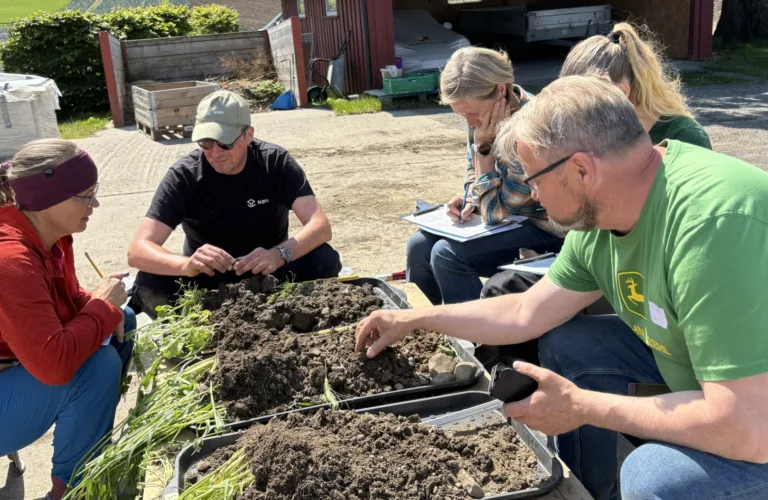
Hvordan ser god jordhelse ut i praksis? Det undersøker vi i prosjektet Jordhelse i praksis, der forskere og
rådgivere møter bønder på gårdene deres for å dele erfaringer, grave i jorda og bli klokere sammen.
Prosjektet besøkte to gårder på Østlandet og en i Trøndelag der alt eller deler av arealet var økologisk. På
Stange fikk vi se hvordan én bonde systematisk jobber for å styrke livet i jorda. Her tilbakeføres all halm til
jorda, og det dyrkes både korn og grønnsaker i vekstskifte. Husdyrgjødsel brukes med omhu, og jorda viste
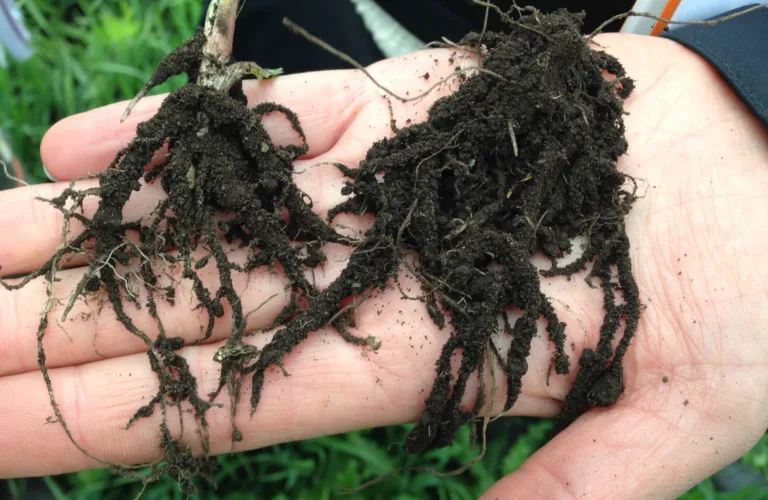
tydelige tegn på god struktur, god rotvekst og en del jordliv – synlige indikatorer på god jordhelse.
Application of Marine-derived Materials as Biofertilizers in Organic Farming2025-08-21
Significant volumes of materials from fish, seaweed and other marine organisms are poorly utilized and may be well suited for application as fertilizers and soil amendments. Brown seaweed contains significant amounts of potassium and calcium, and bone-rich residues from white fish are rich in nitrogen and phosphorus. Together, such materials are a good starting point for a well-balanced complete fertilizer, applicable for arable and feed crops. At NORSØK, several studies have been carried out in recent years with such materials as soil amendments. Whereas fish residues have a remarkably rapid and positive effect on crop growth, seaweed residues have a remarkable residual effect. Potentially toxic elements, especially arsenic and cadmium, need consideration when brown seaweeds are applied to soil, but we have not revealed increased uptake of these elements in crop plants grown in soil amended with seaweed.
Fast separert storfegjødsel: Egnethet som kompostmateriale og dyrkingsmedium2025-03-20
Det er et akutt behov for alternativer til torvbaserte produkter, blant annet som vekstmedium i hagebruk. Bruken av gjødselseparator på husdyrgårder har økt, og denne skiller ut en fast
fiberfraksjon med egenskaper som ligner på torv. Derfor var målet med prosjektet var å undersøke og vurdere om den faste fraksjonen av separert storfegjødsel egner seg som komposteringsmateriale, samt å prøve ut om dette materialet etter kompostering kan brukes som så- og plantejord som erstatning for torvbaserte vekstmedium. Videre var det et mål å drøfte påvirkningen på økologisk og sosial bærekraft, siden det å lage et salgsprodukt ville innebære fjerning av næringsstoffer og organisk materiale fra gården, og mer arbeid for gardbrukeren. To gårder med gjødselseparator på Nordmøre ble brukt som case-studier. Den faste gjødselfraksjonen fra begge gården i prosjektet ble vurdert som godt egnet for kompostering. Massene var homogene, hadde gunstig C/N-forhold og var passelig fuktige (basert på analyser utført på en av gårdene før prosjektstart). Kompostrankene ble håndtert på to ulike måter, den ene ble vendt og luftet med kompostvender, den andre med pallegaffel. Begge kompostene oppnådde raskt temperaturer på rundt 70 ˚C. Massene minket mye i volum (ca. 80 %) under komposteringen. Videre hadde de lav egenvekt og stor evne til å holde på vann, egenskaper som, likt med torv, er verdifulle for produkter beregnet som så- og plantejord. I tillegg til kompostering i felt, ble det utført et lab-forsøk med kompostering i termoflasker. Det ble utført ulike modenhetstester på kompostene der det ikke alltid var samsvar mellom testene. Solvita modenhetstest for kompost og spiretest med karse indikerte «modne» komposter, mens vekstforsøk med brokkoli indikerte at kvaliteten på en av kompostene ikke var tilfredsstillende for oppal av småplanter. Næringsstoff -og tungmetallanalysen for denne komposten viste høyt natrium- og kloridinnhold, noe som kan føre til
ubalansert næringsopptak. For å oppnå en mer omfattende vurdering av kompostkvalitet og egnethet som så- og plantejord, er det nødvendig å bruke flere supplerende tester.
Knyttet til økologisk bærekraft inneholder denne rapporten en drøfting av noen relevante indikatorer: bortføring av næringsstoffer i forhold til næringsbalanser på gårdsnivå, bortføring av organisk materiale fra gården, samt mulige uønskede stoffer som pesticidrester og tungmetaller. Våre funn indikerer at selv ved salg av en betydende menge separert storfegjødsel, vil husdyrgårder som kjøper inn kraftfor og/eller gjødsel fortsett ha en positiv næringsbalanse. Beregninger av mengden organisk materiale som ville fjernes fra gården, viser at en slik praksis på lang sikt kan redusere jordas innhold av organisk materiale. Dette er særlig viktig å ta hensyn til for sandjord, som har begrenset evne til å opprettholde næringsstoffer og jordstruktur. Det ble ikke påvist noen rester av pyralider (herbicid) i den separerte fastgjødselen. Innholdet av tungmetaller var innenfor grenseverdiene for klasse 0 i gjødselvareforskriften, med unntak av sinkinnholdet på én av gårdene, som så vidt overskred grenseverdien. I forhold til sosial bærekraft så ble dette drøftet utefra økt arbeidsbelastning til følge av arbeid med gjødselseparasjon og kompostering, opplevd økt arbeidsmengde og gårdbrukernes motivasjon knyttet til denne praksisen. Erfaringene fra de to gårdene viste at bruk av separator og kompostering kan medføre ekstra arbeidsbelastning, men også gi motivasjon. Det var mest utfordringer med gjødselseparator og kompostering vinterstid. Oppsummert har prosjektet bekreftet at kompostert, separert fastgjødsel kan ha potensial til å redusere bruken av torvbaserte produkter i hagebruk. Det er imidlertid fortsatt behov for videre utprøvinger knyttet til produktutvikling. Når det er blitt bedre kjent hva som kreves for å lage tilstrekkelig gode vekstmedier av dette materialet, anbefaler vi at fremtidig arbeid også inkluderer analyser av økonomiske og energimessige aspekter.
Effects of calcium carbonate products on methane emissions from cattle slurry - Cal-Me2025-03-18
Landbruk er en betydelig kilde til utslipp av metan (CH4). Omtrent 20 % av metanutslipp fra storfeholdet er relatert til gjødsellagring. I bløtgjødsellager er det anaerobt og mangel på luft. Det skjer en nedbryting av det organisk materiale i gjødsla og metanproduserende mikroorganismer danner metan (metanogenese). Metan er en potent klimagass som har rundt 28 ganger sterkere potensiale enn CO2 for global oppvarming. En studie på norske gårder med melkeproduksjon avdekket at på en gård hvor en kalksuspensjon ble tilsatt bløtgjødsel, var det spesielt lave CH4-utslipp. Vi ønsket å undersøke om vi kunne bekrefte at kalksuspensjon kan redusere CH4-utslipp fra bløtgjødsellager selv om andre undersøkelser tydet på at kalk kan akselerere nedbrytning av organisk materiale, noe som kan føre til økt CH4-produksjonen. Dette kan i så fall være en gunstig forbehandling for biogassanlegg.
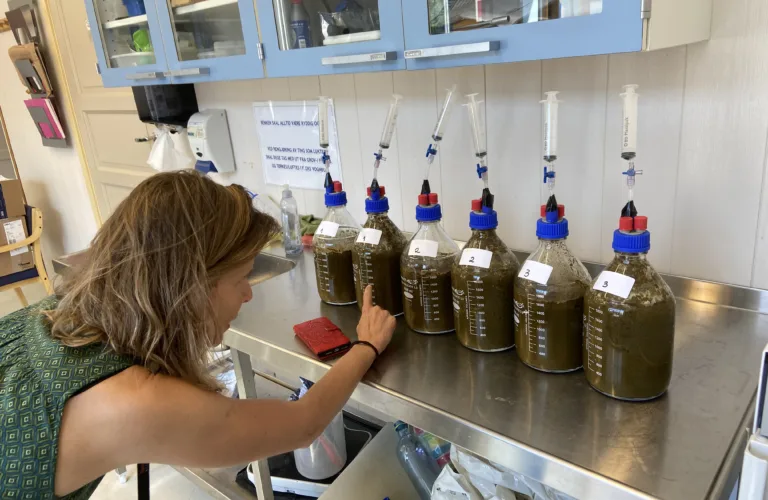
Vi startet et forsøk hvor vi fylte storfebløtgjødsel fra tre ulike kilder på 2 liters flasker: Bløtgjødsel fra gjødsellager hvor det tilsettes kalksuspensjon en gang i året; helt fersk bløtgjødsel hentet fra en pumpekum ved fjøs; bløtgjødsel som har blitt lagret i en tett tank i 8 måneder. Det var i alt 9 flasker for hver gjødseltype. Tre av disse ble tilsatt finmalt kalkpulver og tre ble tilsatt den samme kalksuspensjonen som ble brukt i det omtalte gjødsellageret. Kalksuspensjonen holdt seg flytende fordi den ble tilsatt et dispergeringsmiddel. Gassutslipp, kjemiske og biologiske sammensetninger ble overvåket over tid. Flaskene stod i klimaskap i nesten 8 måneder. I denne perioden undersøkte vi jevnlig sammensetningen av gasser i lufta over gjødsla i flaska.
Vår studie bekreftet ikke at de CaCO₃-baserte produktene vi testet reduserte CH₄-utslipp fra bløtgjødsel fra ku. Tvert imot var CH4-utslippene høyest i bløtgjødsla som var blitt tilført kalksuspensjonen en gang i året. Studien bekreftet høyere nedbrytning av det organiske materialet i denne bløtgjødsla sammenlignet med bløtgjødsel uten tidligere tilførsel av kalk. Dette kan være årsaken til at det først i inkubasjonsperioden, og totalt, var høyest CH4-utslipp fra bløtgjødsel som tidligere var tilsatt kalk. Vi fant imidlertid ingen effekt av hverken kalkpulver eller kalksuspensjonen tilsatt flaskene på CH4-utslipp.
Både ved oppstart og ved slutt av studien fant vi metanogene arker som omdanner nedbrytningsprodukt som eddiksyre til metan, og vi fant sulfatreduserende bakterier som samtidig som de reduserer sulfat til hydrogensulfid kan oksidere metan til CO2. Høye H₂S-utslipp i starten av forsøket og avsetning av elementært svovel på toppen av gjødsla viste at det skjer en aktiv omdanning av svovel. Forskjeller i stratifisering i bløtgjødsel og mikrobiell populasjon i gjødsellager i forhold til våre små flakser påvirket sannsynligvis metanproduksjonen. Dette kan muligens forklare noe av avviket mellom utslipp fra bløtgjødsel på flaske og bløtgjødsellager. Selv om vi i vår studie ikke fant at tilførsel av kalksuspensjonen reduserte CH4-utslipp, påvirker denne tilsetningen flere biologiske og kjemiske faktorer som vi ikke har helt oversikt over. Det kan være mekanismer i gjødsellageret som vi ikke har fanget opp i dette flaskeforsøket. Videre forskning bør undersøke langsiktige effekter av tilførsel av kalksuspensjonen i gjødsellager og på pH, nedbrytning av organisk materiale, frigjøring av stoffer som er skadelige for metanogene organismer som lever i bløtgjødsel og mulig indirekte effekt av kalksuspensjon på metanoksidasjon, deriblant rollen til sulfatavhengig, anaerob metanoksidasjon.
Liming halved N2O emissions following plowing of grass-clover mixtures in an acidic soil2025-03-06
Introduction
Leguminous in ley mixtures and green cover crops in rotation with cash crops are means to increase nitrogen use efficiency and/or reduce N losses. However, their benefits can be offset by increased N2O emissions following termination by tillage. Liming of low pH soils can reduce N2O from denitrification1), but the effect on total N2O emissions from incorporation of nitrogen rich green residues1) is uncertain, as it can also enhance mineralization and nitrification.
Methods
We measured field N2O emissions following ploughing of several ley mixtures. Treatments were repeated in control (pHaq ~5.5) and limed (pHaq ~6.0) plots which were wholly
randomized in a silty clay loam at Ås, Norway. Liming took place shortly before establishing the leys, 4 years before ploughing.
Results
N2O emissions increased with increasing ley yields in the previous years, which indicates a linear relationship with residue amounts. However, at any level of previous biomass yield, N2O emissions in limed treatments were only half of those in low pH treatments. In this experiment the biomass yield dependent on species composition and N fertilization, not on soil pH, and was higher in red clover-grass than in grass only or white clover-grass mixtures. Liming significantly raised the total mineral N content in the soil, but the increase was small (typically around 3 mg N kg-1).
Conclusion
Maintaining a sub-neutral pH can effectively mitigate N2O emissions following incorporation of nitrogen rich green residue. Whether this applies also in the case of large incorporation of fresh herbage deserves further studies
Some indicators of organic carbon status in Norwegian agricultural soils2025-03-06
Diverse pedoclimatic zones lead to large variations in soil organic carbon (SOC). Key questions involve how much carbon the soil contains, what is its potential for more storage and whether levels are sufficient to maintain soil structure stability (SSS). We evaluate current SOC levels using ratios of clay/silt fractions to SOC, to identify potential SOC storage areas and to gauge likely SSS status. SOC retention is affected by clay and silt, which protect it from microbial activity. Hassink (1997) used the ratio of clay plus silt 10, compared to systems with ratios of 6- 8. In western Norway, on grassland soils with generally low fines20/SOC ratios, SOC appears to be declining despite manure inputs, especially in cases with high initial SOC levels (Rittl et al. 2023). To obtain insight into the potential for SOC across Norway, data was used from a study in which SOC and soil texture was analysed on 600 fields in agricultural districts throughout the country. Results are grouped into 13 regions with relatively uniform climate and cropping within each. Greatest proportions of fields with high ratio levels were found in regions around Oslo and east of Oslofjord, with predominantly clay and silty clay loams, where 65% of fields had clay/SOC >10 and 80% had fines20/SOC >20. Proportions of fields with fines20/SOC >20 were somewhat lower west of Oslofjord (65%) and in central Norway (44%), where many soil textures are found, and in an inland region with predominantly silty soils (55%). Proportions of fields with high ratio levels were low in inland regions with loam soil, where 15-20% had clay/SOC >10 and 24% had fines20/SOC >20. All these regions are mainly arable, with some livestock, and mean SOC levels are 3,5%. In these regions, the proportion of fields with clay/SOC >10 was below 5% whilst that of fines20/SOC >20 was below 10%. Mean clay/SOC ratios were 1-3 and mean fines20/SOC ratios were 4-10. Arable land has thus greater potential for carbon storage than grassland, whilst at the same time increasing SSS and reducing erosion risk.
Effects of long-term soil organic matter decline on soil nutrient status and organic matter composition in organically managed grass-clover ley and permanent pasture in Norway2025-02-24
Grasslands are often seen as a beneficial measure to increase soil organic matter (SOM) content in (former) croplands and reduce GHG emissions. In permanent grassland the continuous ground cover and the high root density protect the soil against erosion, leading to an accumulation of organic matter. In cultivated grasslands, such as grass-clover leys, the nutrient cycle encompasses an accumulation phase during the ley period, followed by a rapid decomposition after ley termination. Upon ploughing the grass-clover ley, there is an increased mineralization of nutrients, contributing to the buildup soil fertility. As part of the global C-arouNd project consortium, which aims to investigate how short and long-term agricultural management practices affect SOM persistence in the soil profile, we want to investigate how SOM decline affect the soil nutrient status and organic matter composition in the long term, in a permanent and cultivated grassland in West Norway. At Tingvoll gård experimental farm, organic milk production was established in 1986, replacing the previous conventional sheep farming. Records of bought additional feed and sold products have been kept, allowing to calculate a farm nutrient budget. Since 1990,soil samples (0-20 cm depth) have been taken every 5–7 year for determination of SOM and soil fertility status. In addition grass-clover yields have been annually measured since 1991. Preliminary analyses of the historical data show a decline on the SOM concentration (ignition loss) in the 0-20 cm top layer over 30-y period. On average in the cultivated grassland, SOM concentration declined from 14.0 % and 7.9 % in 1990 to 7.4 % and 6.4 % in 2021. In the permanent pasture, where the soil is not ploughed every 4 years, the losses of SOM content were smaller, on average SOM decreased from 10.2 % to 8.0 %. We hypothesize that soil from fields with the largest decline in SOM over the past decades will contain relative more stable carbon components while also being richer for most macronutrients. Analysing the farm nutrient budget, i.e. the in- and output of nutrients from the farm system, will give further insight in potentially deficient nutrients in soil and help establish a more durable soil management. Soil nutrient imbalances can lead to higher SOM turnover and a further decrease in SOM content can be expected. To test these hypotheses, soil samples will be taken in autumn 2024 to study the macronutrients and SOM composition in more detail. C, N and S will be measured by dry combustion, available P by the Bray-1 Method and exchangeable Ca, K and Mg using ammonium acetate extraction. SOM composition will be examined using a thermal fractionation method on the different size fractions (fPOM, oPOM & MAOM) of the soil.
Exploring Soil Organic Carbon Persistence for Sustainable Land Management Practices: A Thermal Analysis Approach2025-02-24
Understanding the persistence of soil organic carbon (SOC) is pivotal for developing effective strategies in climate change mitigation and sustainable land management. Relatively cheap and easy to use methods are needed to study the underlying processes on a larger scale. However, the intricate nature of soil organic matter (SOM) and environmental factors poses significant challenges to accurately assess SOC persistence. This study proposes an integrated approach combining standardized thermal analysis methods with density fractionation to quantify SOC persistence. By comparing techniques such as Thermogravimetric Analysis coupled with Differential Scanning Calorimetry and a multiphase carbon and moisture determinator with a ramped heating analysis, we aim to elucidate distinct patterns in SOC stability across diverse soil compositions and environmental conditions. To do so, we will establish a standardized thermal method for determining SOC persistence in the different density fractions (fPOM, oPOM & MAOM). We will expect that the integration of standardized thermal analysis methods with density fractionation for assessing SOC persistence will reveal distinct patterns in SOC stability across different soil compositions and environmental conditions. Our research seeks to contribute to the advancement of understanding SOM dynamics in the large scale, essential for devising sustainable land management practices and addressing pressing global challenges related to soil carbon storage and climate change mitigation.
Skitgass. Klimagassutslipp fra bløtgjødsel2025-01-20
Hovedmålet for prosjektet SkitGass med hjelpeprosjekt var å identifisere muligheter til å redusere utslipp av klimagasser fra husdyrgjødsellager. Vi undersøkte gjødseltemperatur i 16 gjødsellagre og klimagassutslipp i 8 av dem (to kjellere, to åpne kummer med ny gjødsel ovenfra, to kummer med tak og ny gjødsel nedenfra og to lagre med biorest). Vi fant at det var kjølig i gjødsellagrene med en gjennomsnittstemperatur på 8,4 °C i årene 2022 og 2023. Selv om sommeren var temperaturen sjelden over 15°C. Gjødsla var varmest i august med en gjennomsnittstemperatur på 13,8°C i 2022. Det var stor variasjon mellom gjødsellagrene i vanninnhold og skorpedannelse. Gjennomsnittlig innhold av organisk materiale (VS) i gjødsla varierte fra 2,5 til 6,6 % VS. Det var lavest VS % i biorest fra biogassreaktor, og i en kum uten tak. Metan (CH4) var den gassen som betydde desidert mest for utslipp av klimagasser fra lager for bløtgjødsel. Det var store variasjoner i utslipp av metan både mellom gjødsellager og gjennom året. Medianverdi for alle målinger var 4,1 mg CH4-C per kg VS i løpet av en time. Det var lavest utslipp av metan (1,1-1,2 mg CH4-C per kg VS og time i medianverdi) der det var høy konsentrasjon av VS i selve bløtgjødsla (gjødsel uten skorpe eller under skorpa). Kalk kan muligens spille en rolle her. Vi fant også lavere utslipp av metan ved tjukk, porøs skorpe. Per kg VS var det ikke lavere utslipp fra biorest enn fra ubehandlet gjødsel. Tilsetting av fersk gjødsel eller annet energirikt materiale som urea/olje-produkt gir stor øking i metanutslipp fra lager for biorest. Det er spesielt viktig å ha effektive tiltak for å kjøle ned biorest før lagring. Bedre grunnlagsdata for modeller for vurdering av ulike tiltak er nødvendig.
Tiltak for reduserte utslipp fra gjødsellager: Lav temperatur i gjødsellageret; Tak over gjødsellager og tilførsel av ny gjødsel nedenfra; surgjøring; tett lager og oppsamling av gass fra gjødsel eller biorest; god utråtning av biorest og nedkjøling før lagring. Tiltak som trenger mer forskning: Høyt innhold av VS i kombinasjon med tilførsel av lett tilgjengelig kalk; separering av bløtgjødsel og biorest; tilførsel av finfordelt luft nedenfra.
Jorddekke med plantehakk – avling, ugras, næring og jordhelse2025
Det er mange positive effekter ved bruk av plantehakk som jorddekke. I et økologisk vekstskifte kan det gi store fordeler ved å redusere ugrastrykket, tiden brukt til luking samt tilføre næring. Plantehakk kan gi en betydelig avlingsøkning, men det vil avhenge av type plantehakk og av jordtypen. På sandjord bør man legge på plantehakket en stund før planting for at nedbrytingen, og dermed frigjøringen av næringsstoff, er godt i gang ved planting. Alternativt kan man bruke tilleggsgjødsling før plantehakket legges på.
Advancing Soil Health and Agroecology in the Nordic Region2025
This policy brief outlines the urgency and opportunity for advancing soil health and agroecology in the Nordic region. It highlights the essential ecosystem services provided by healthy soils, the risks of continued degradation, and regionally adapted actions to support sustainable food systems. Key recommendations include developing Nordic-specific monitoring frameworks, incentivizing agroecological and adjacent practices, and fostering regional collaboration and innovation.
Calculating the effect of intensive use of urban organic waste on soil concentrations of potentially toxic elements in a peri‑urban agriculture context in Norway2025
Recycling nutrients and organic matter available as waste in urban areas may close nutrient gaps and improve soil quality, but the concentrations of potentially toxic elements (PTEs) are commonly higher than in mineral fertilisers. How quickly may the limits for soil quality be exceeded, and for which elements, if such materials are applied intensively? For a rough answer to this question, we used soil data from ten case farms near Oslo and Bergen (Norway) to estimate how PTE concentrations increased when the demand for nitrogen (N), phosphorus (P) and potassium (K) in a theoretical carrot crop produced every year was covered by compost or digestate from source-separated food waste, or composted garden waste, compared with manure from horses and poultry which are often kept in peri-urban areas.
With the intensive fertilisation assumed here, the Norwegian soil quality limits for PTEs were reached within 20–85 years, and faster for soil with more organic matter since regulatory limits set by weight discriminate soils with low bulk density. The limits were reached first for Cu and Zn, which are both essential micronutrients for crop plants. The concentrations of macronutrients in the urban waste-based fertilisers were not well balanced. Rates covering the K demand would lead to high surpluses of P and N. In peri-urban vegetable growing, high applications of compost are not unusual, but more balanced fertilisation is required.
The Norwegian regulations for PTEs in organic soil amendments and agricultural soil are stricter than in the EU, and do not support recycling of organic matter and nutrients from urban waste. Many materials which can only be applied with restricted amounts to Norwegian agricultural soil, may be applied according to crop demand in the EU. Growers utilising urban waste-based fertilisers intensively should monitor the soil regularly, including PTE analyses. Soil sampling should occur on fixed sampling points to reveal changes in concentrations over time. Norwegian authorities should consider a revision of the organic fertiliser regulation to support recycling of valuable organic materials. There is a need for more data on the PTE concentrations in agricultural soil and organic fertiliser materials.
Traditional Norwegian farming practices drive biodiversity – A case study from coastal heathlands2025
Human disturbances are often viewed as drivers of biotic homogenization, where generalist species thrive at the expense of specialists. However, human activities can also positively influence biodiversity. This study investigated how traditional farming practices, such as prescribed burning and grazing, have shaped biodiversity across multiple taxonomic groups – above and below ground – across three successional phases of a coastal heathland in Norway. We hypothesized that the vegetation-mosaics created by these traditional practices support greater biodiversity of plants and invertebrates than any single successional stage alone. We examined the impact of these practices on the taxonomic biodiversity of key organism groups (including plants, arthropods, nematodes, soil microbes, soil mesofauna and earthworms) across the three heathland successional phases. Our findings demonstrated: (i) how prescribed burning and grazing promote management induced vegetation mosaics; (ii) that this vegetation mosaic fosters high species diversity, with each phase supporting an unique set of taxa; (iii) that key organismal groups, including arthropods, fungi, and bacteria, largely contribute to the overall biodiversity; and (iv) that traditional management practices rejuvenate pasture, maintain high biodiversity, and play a crucial role in preventing uncontrolled large-scale fires. By analysing multiple organismal groups across heathland successional phases, we are the first ones in Norway to demonstrate how burning and grazing create a vegetation mosaic that enhances biotic heterogeneity instead of leading to diversity loss. These results highlight the importance of sustaining traditional farming practices for the preservation of biodiversity of plants and invertebrates in coastal heathlands.
Kystlyngheia på Nerlandsøy2024-12-27
I dette prosjektet har vi jobbet tverrfaglig for å oppnå en helhetlig forståelse av betydningen av det kystlynghei-baserte landbruket i Møre og Romsdal. Vi har valgt Nerlandsøy i Herøy kommune i Møre og Romsdal som studielokalitet og vurdert den økologiske tilstanden til kystlyngheia. Kystlynghei er en truet (semi-naturlig) naturtype som krever regelmessig skjøtsel for å bevares. Derfor har vi i tillegg undersøkt hva som skal til for å opprettholde skjøtselen av dette kulturlandskapet. For å vurdere kystlyngheia sin økologiske tilstand og kunne si mer om påvirkninger av tradisjonell skjøtsel, med beiting og brenning, har vi undersøkt flere ulike faktorer som hver for seg og sammen kan si noe om tilstanden. I tre vegetasjonsfaser ble det undersøkt mengde, aktivitet og mangfold av en rekke ulike organismegrupper i jorda, på bakken og over bakken. Pionerfase (brent i 2022), byggefase (brent i 2017) med mye gras, urter og unge røsslyngplanter og moden fase med eldre lyngplanter. Hele arealet blir beitet av sau store deler av året. Jordprøver ble tatt for å registrere meitemark, midd, spretthaler, nematoder, bakterier og sopp og måle biologisk aktivitet (2022 og 2023). Det ble også gjort målinger av næring og karbon i jord (2022). Disse målingene kan være starten på å etablere dataserier over tid og være metodikk for å vurdere økologisk tilstand og økosystempåvirkning fremover.I jordprøver tatt i 2022 fant vi relativt høyt innhold av organisk materiale (OM) på Nerlandsøy, med i snitt ca. 36 % OM (glødetap). Omgjort til estimert mengde karbon i jorda pr dekar utgjør dette mellom 10 og 14 tonn C (0-10 cm jorddyp). Jorda hadde pH mellom 4,7-4,96, lite P-AL og godt med K-AL og Mg-AL. Hovedfunn var at det i pionerfasen, altså ett og to år etter brenning, ikke ble registrert tydelig mindre biologisk aktivitet eller biologisk mangfold av hverken smått eller større jordliv. Det ble funnet noe flere spretthaler, midd og meitemark i byggefasen enn i de andre to fasene. Det var både unike og felles arter av både planter, nematoder, jordlevende sopp og jordlevende bakterier for de tre fasene, og heller ikke synlig negativt for pionerfasen.Vårt arbeid tyder på at mosaikken av ulike vegetasjonstyper som tradisjonell skjøtsel av kystlynghei, med kontrollert brenning og beiting med sau gir, ikke var særlig negativt for organismer i jorda. De fleste dataene vi samlet inn tydet på at mosaikken av de tre fasene skapte mer biologisk mangfold og høyere biologisk aktivitet enn en fase ville gjort alene. Våre funn viste også at de forvaltningsinduserte vegetasjonsmosaikkene bidrar til høy artsrikdom, der hver fase bidrar med et unikt sett med grupper av organismer og ett sett med felles organismer. I tillegg til verdifulle funn knyttet til jordkarbon og artsmangfold, har vi gjennomført datainnsamling om landbruket og husdyrproduksjonen på Nerlandsøy. Vi har sett på produksjonsdata, dyrevelferd og dyras helse og ser at driftssystemet gir god dyrevelferd og er en viktig ressurs for matvareberedskapen til befolkninga. Data som vi har samla inn og analysemetoder som er brukt, gir mulighet for forvaltning og næringsliv til å følge utviklinga over tid og innrette tiltak deretter.Vi har gjennomført en intervjustudie som viser at kystlynghei-skjøtselens verdi kan knyttes til lokal
matproduksjon og matsikkerhet, rekreasjon, bevaring av kulturmiljø og tradisjonell kunnskap, identitet samt kontroll av villbranner. Dette understreker at kystlyngheiene er en naturressurs som leverer viktige økosystemtjenester. I intervjustudien har vi også avdekket at det kystlynghei�baserte landbruket indirekte bidrar til sosiale verdier for bøndene som deltar i skjøtselen av denne naturtypen. Samlet tyder våre funn på at skjøtselen av kystlyngheia utgjør en viktig samfunnsøkonomisk tjeneste. I rapporten presenteres anbefalinger som bør følges opp av ulike instanser for å sikre at forvaltningen av denne naturtypen vedvarer over tid. Det legges vekt på tiltak og hensyn som opprettholder et aktivt lokalt landbruksmiljø, samt tiltak som fremmer skjøtselen gjennom beiting og brenning.
Effects of organic amendments and cover crops on soil characteristics and potato yields2024-07-07
Intensive potato production may reduce the soil organic matter content (SOM), which may impact several soil functions and increase the incidence of potato diseases. We examined if cover crop and addition of organic materials may counteract these effects. Organic materials were one application of biochar mixed with liquid digestate (BLD); solid digestate (SD); or farmyard manure (FYM); with or without winter rye as cover crop, in a field with regular potato growing. Organic amendment increased SOM, especially for FYM and BLD, while cover crop did not affect SOM. Yet, cover crop increased tuber yields in the second year, and reduced the severity of potato diseases by 10% in post-harvest potatoes in both years. In the second year, the number of marketable potatoes after storage increased by 37% with cover crop. Organic amendments did not affect potato yield or quality, but the proportion of marketable potatoes tended to be higher in the amended soil. By lab incubation, BLD showed the largest potential for SOM storage, up to 32 years, followed by FYM and SD. Cover crops and organic amendments is recommended in potato production, especially for early potatoes where there is sufficient time after harvest to establish a good cover crop.
Inhibition of the development of Rhizoctonia solani by plant secondary metabolites – a laboratory study2024-07-07
Black scurf and stem canker on potatoes, caused by the destructive soil-borne pathogen Rhizoctonia solani Kühn are a major problem for potato growers worldwide. Biological control agents such as plant leaf extracts can influence the severity of R. solani infection and help to reduce the risks to human health and the environment associated with the use of hemical fungicides. In this study, the inhibitory effect of the secondary plant metabolites aucubin, catalpol (iridoid glucosides) and acteoside (phenylethanoid glycoside) from methanolic extracts of Plantago lanceolata (Ribwort plantain (en), Smalkjempe (no)), a native plant in the Nordic countries, on the growth of R. solani mycelium on potato dextrose agar growth medium will be tested for the first time. Plant extracts will be obtained from plants of different age classes and metabolic profiling will be performed with LC-(HR)MS analyses and the concentrations of identified metabolites will be determined. To analyse whether the inhibitory interactions on fungal growth originate from the known secondary metabolites or are caused by the bulk plant extract, we will first expose the fungus to different concentrations of extracts, redissolved in aqueous solution and added to the growth medium, and in a further step we will carry out the same approach with the isolated secondary metabolites as pure substances. The fugus will be incubated for 5 days and the mycelium growth radius will be measured every 24 hours during incubation. Thereafter a suppression index will be calculated and compared to the untreated control. The results are pending at the time of submission of the abstract but will provide a good initial understanding to determine whether extracts of P. lanceolata can be used as a natural biological control agent as an additional component of a more sustainable strategy to manage the risk of infection of potato with R.solani and to reduce the severity of the disease caused by this pathogen.
Liming halved N2O emissions following plowing of grass-clover mixtures in an acidic soil.2024-06-17
Leguminous in ley mixtures and green cover crops in rotation with cash crops are means to increase nitrogen use efficiency and/or reduce N losses. However, their benefits can be offset by increased N2O emissions following termination by tillage. Liming of low pH soils can reduce N2O from denitrification1), but the effect on total N2O emissions from incorporation of nitrogen rich green residues1) is uncertain, as it can also enhance mineralization and nitrification.
We measured field N2O emissions following ploughing of several ley mixtures. Treatments were repeated in control (pHaq ~5.5) and limed (pHaq ~6.0) plots which were wholly randomized in a silty clay loam at Ås, Norway. Liming took place shortly before establishing the leys, 4 years before ploughing.
N2O emissions increased with increasing ley yields in the previous years, which indicates a linear relationship with residue amounts. However, at any level of previous biomass yield, N2O emissions in limed treatments were only half of those in low pH treatments. In this experiment the biomass yield dependent on species composition and N fertilization, not on soil pH, and was higher in red clover-grass than in grass only or white clover-grass mixtures. Liming significantly raised the total mineral N content in the soil, but the increase was small (typically around 3 mg N kg-1).
Maintaining a sub-neutral pH can effectively mitigate N2O emissions following incorporation of nitrogen rich green residue. Whether this applies also in the case of large incorporation of fresh herbage deserves further studies
C-arouNd: Refining Soil Conservation and Regenerative Practices to Enhance Carbon Sequestration and Reduce Greenhouse Gas Emissions2024-06-10
While the last 60 years have seen significant progress in global food production with inorganic fertilizers, plant breeding, and pesticides, this has come at a cost to soil health. This intensive agriculture has led to a reduction in soil organic carbon (SOC) stocks, increased greenhouse gas (GHG) emissions, and ultimately contributed to global warming. Agriculture and land-use change are responsible for nearly 20% of global GHG emissions, making it a significant source of nitrous oxide (N2O) due to synthetic nitrogen fertilizers and methane (CH4) due to livestock activity and rice cultivation. This project aims to evaluate the influence of conservationist and regenerative agricultural practices on carbon (C), nitrogen (N), and phosphorus (P) cycling, soil biodiversity, and GHG emissions, with a particular focus on long-term SOC stocks and the processes governing carbon persistence. To achieve this, the project has established a consortium of long-term field experiments that assess the impact of different cropping systems and agricultural practices on soil properties. Participants from 12 countries are involved, contributing a total of 37 field sites with varying chronosequences or contrasting agricultural management practices. At 26 sites established for at least 10 years, estimates and scenario models of potential N2O, CO2, and CH4 emissions from cropping, pasture, and forest systems will be generated using the best available IPCC or local emission factors. Additionally, GHG emissions will be directly measured at a subset of these sites. The project is building a global database of C and N stocks, bulk density, soil fertility, and GHG emissions across diverse ecosystems and under different agricultural management practices. This will allow researchers to determine how climatic conditions, net primary production of the cropping systems, and soil type influence C and N stocks, nutrient dynamics, and GHG emissions. The ultimate goal of the project is to recommend best management practices for food crop production that promote soil carbon accumulation, particularly mineral-associated organic matter (MAOM), without increasing GHG emissions. This will contribute to the long-term sustainability and resilience of agricultural systems. As promised in the project deliverables, the Long-Term Experiment (LTE) metadata has already been organized in a FAIR repository. Additionally, the protocols for soil sampling, laboratory analyses, and site characteristics are being prepared for publication. Furthermore, soil carbon sequestration is being quantified across all fields (or planned for future sampling), and in some experiments, greenhouse gas emissions are also being measured. This includes African dark earths and surrounding ecosystems, where both carbon sequestration and GHG emissions are being quantified. PhD students have also begun field trips to Norway for soil sampling.
Fertilizer quality of anaerobic digestate produced from marine residual resources (CIRCULIZER)2024-06-10
The access to marine residual resources is large in Norway, yet its use in agriculture remains limited. Circulizer project aims to improve the circularity between the blue and green sector, by increasing the knowledge of the use of marine residues (i.e. fish sludge and fish silage) for biogas production and its effects on the fertilizer quality (digestate) and environment. While the quality of digestate from food waste and animal manure has been extensively studied, the impact of incorporating increasing proportions of new marine residual resources remains to be investigated. To be able to substitute mineral fertilizer with digestate derived from marine residues, farmers require knowledge of its nutrient composition and availability. In contrast, biogas plant operators need assurance of a market for both biogas and digestate before investing in new facilities. Circulizer will run lab and field scale experiments where the biogas process performance and digestate quality will be assessed. Expected outcomes are: (i) Enhancing the green transition and circularity of Norwegian food production by recycling valuable nutrients from fish production for agricultural use; (ii) Ensuring environmental safety by addressing concerns related to heavy metals and organic pollutants; (iii) Increasing the utilization of marine residual resources for biogas production; (iv) Supporting the growth of the fish farming industry in Norway by improving waste treatment and recycling options for unavoidable residual resources, thereby facilitating increased fish production and nutrient recycling
Karbon og biologisk aktivitet i jord med eng- og potetdyrking (K-BEP)2024-02-21
Eng- og potetdyrking påvirker biologisk aktivitet og karbon i jord som viktige deler av jordhelsa. I prosjektet «Karbon og biologisk aktivitet i jord med eng- og potetdyrking (K-BEP)» undersøkte vi flere ting. Mellom annet hvordan engdyrking i 30 år og en nylig «karbonboosting» med ulike typer organisk materiale (OM) i potetdyrking, påvirket jordbiologi, mengde og typer karbonfraksjoner og jordhelse. Åtte ulike praksisnære tester ble brukt for å vurdere hvor sensitive og egnet de var til å gi informasjon om jordhelse og som jordhelse-indikatorer. Disse ble testet i jord under eng, beite og potet, i behandlinger der vi forventet variasjon i jordhelsa. Det var en gradient i «jordarbeiding» og ulik tilførsel av organisk materiale. Undersøkelsene ble gjennomført i 2021 og testene dekket ulike aspekter av jordhelse, inkludert innhold av OM, karbonfraksjoner, jordbiologi og biologisk aktivitet. To dataverktøy og egne målinger over 30 år ble brukt til å estimere karbonmengder i jord og endringer i jordkarbon over tid.
De fleste jordhelsetestene viste forskjeller mellom engsystemet og potetsystemet, og da med høyere verdier i engsystemet. Det var imidlertid få forskjeller innad mellom behandlinger og arealer innad i systemene. Beite viste tendens til bedre jordhelse enn eng av ulik alder, mens det i potetfeltet ikke ble funnet noen forskjeller knyttet til ettereffekt av ulike typer tilført OM. Det anbefales derfor å bruke flere tester samlet. Ved å samle data i et jordhelsediagram basert på normalverdier av hver test, kan man visualisere resultatene fra hvert skifte i forhold til hverandre. Da får man en indikasjon på om endringene går til det bedre eller ikke mht. jordhelse, før og etter et eventuelt tiltak i drifta, eller mellom ulike behandlinger eller mellom skifter med samme behandling. Det anbefales i tillegg å grave i jorda og vurdere forholdene visuelt og sensorisk, og se testresultatene i sammenheng med jordanalyser. Det trengs flere norske data fra ulike jordhelse-tester for å tolke resultatene bedre, for å opparbeide norske referansenivåer og som grunnlag for å anbefale et utvalg tester egnet til gardsbasert vurdering av jordhelse under norske forhold.
I snitt var det 4-8 % høyere innhold av OM (GT%) der det to år tidligere ble tilført fast biorest (BR), hestegjødsel (HG) og biokull med flytende del av biorest (BK+). Det var også noen små forskjeller mellom behandlingene om karbonet ble funnet i som POM (partikulært OM) eller MAOM (bundet til jordmineraler) i jorda. BK+ ble estimert som mer stabilt over tid i jord basert på laboratorieforsøk, enn de andre typene OM.
Ved å bruke skiftevis målte verdier for glødetap (OM) fra jordanalyser, ble karbonbeholdningen i et 20 cm tykt jordlag estimert. De fleste bønder forvalter mye karbon i matjordlaget. Innholdet var lavest i potetfeltet, med estimater på 2,9 tonn-3,3 tonn C/daa, middels i engene, med 4,7-9,9 tonn C/daa og høyest i permanente beiter med 11,9-14,4 tonn C/daa. Det var i tillegg betydelige mengder karbon i jordprøvene tatt fra 20-40 cm dyp, bare målt i engarealene.
Vi sammenliknet målte og simulerte jorddata for å si noe om endringer i jordkarbon på en melkeproduksjonsgard over tid. Jorddata fra ulike skifter på garden viser generelt et høyt innhold av OM i jorda, i snitt 7 % i 2021. Videre viste resultatene at beholdningen av OM og karbon i matjordlaget (0-20 cm) avtok over en 30 årsperiode på de fleste skiftene. Simuleringer gjort i C-Tools modellen for karbonendring i mineraljord over en 100 års periode, stemte bra overens med de målte verdiene for skifter der utgangsmengden OM i jorda var 12 % (GT%) og lavere. For skifter med over 12 % OM ved prøvetakingsstart, var det ikke så bra samsvar. De målte verdiene viser da en raskere nedgang i innholdet av OM og karbon enn de simulerte endringene i C-Tools. Dette indikerer at utgangsnivået er viktig for skjebnen til OM og karbon i jordbruksjord. Videre at tross i kjente fordeler av flerårig gras og tilførsel av husdyrgjødsel, virker det krevende over tid å opprettholde eller øke innholdet av jordkarbon i norsk jordbruksjord.
Effects og long-term soil organic matter decline on soil nutrient statuts and organic matter composition in organically managed grass-clover ley and permanent pasture in Norway2024
Grasslands are often seen as a beneficial measure to increase soil organic matter (SOM) content in croplands and reduce GHG emissions. In permanent grassland continuous ground cover and high root density protect the soil against erosion, leading to an accumulation of SOM. In cultivated grasslands, such as grass-clover leys, the nutrient cycle encompasses an accumulation phase during the ley period, followed by a rapid decomposition after ley termination. Upon ploughing the grass-clover ley, there is an increased mineralization of nutrients, contributing to soil fertility buildup. As part of the global C-arouNd project, which aims to investigate how short and long-term agricultural management practices affect SOM persistence, we want to investigate how long-term SOM decline affect the soil nutrient status and organic matter composition in a permanent and cultivated grassland in West Norway.
At Tingvoll experimental farm, organic milk production was established in 1986, replacing the previous conventional sheep farming. Since 1990, soil samples (0-20cm) have been taken every 5 7-year for determination of SOM and soil fertility status. Grass-clover yields have been annually measured since 1991. Preliminary analyses show a decline of SOM (ignition loss) in the 0-20cm toplayer. On average in the cultivated grassland, SOM concentration declined from 14.0% and 7.9% in 1990 to7.4% and 6.4% in 2021. In the permanent pasture the losses of SOM content were smaller: on average SOM decreased from 10.2% to 8.0%. We hypothesize that fields with the largest decline in SOM over the past decades will contain relative more stable carbon components while also being richer for most macronutrients. Nutrient imbalances can lead to stronger SOM turnover, meaning that there have not been reached a steady state yet and a further decrease in SOM content can be expected. To test these hypotheses, soil samples will be taken in 2024 to study macronutrients and SOM composition in more detail. SOM composition will be examined using a thermal fractionation method on the different size fractions of the soil
MerMold og CropDrive - to prosjekter om jordhelse2024
Power point presentation on the main results of MERMOLD projects: effects of cover crop and organic amendments on potato yield and quality. Presentation of the CroDrive project, where we investigate how the use of cover crops affect soil and plant health.
Exploring Soil Organic Carbon Persistence for Sustainable Land Management Practices: A Thermal Analysis Approach.2024
To ensure the sustainability of an approach to maintain or increase soil organic matter, we need to understand the particularities of various soil organic carbon (SOC) fractions and their response to alterations in soil management practices. Diverse methods of SOC fractionation have been used to isolate and study SOC. Recently, soil physical fractionation has regained popularity due to its simplicity. Soil physical fractionation divides the soil in two main pools, particulate organic matter (POM) and mineral-associated organic matter (MAOM). Yet, the biochemical quality and therefore persistence of the SOC present in these two fractions remain unknown. SOC thermal fractionation provides detailed insights into composition, turnover rates, and stability mechanisms, crucial for advancing sustainable land management practices. This study aims to investigate the relationship between thermal stability and SOC persistence in bulk soil, in the POM and the MAOM fractions – emphasizing the necessity for rapid, precise, and affordable methods. To do so, we will establish a standardized thermal method for determining SOC persistence, comparing thermogravimetry, differential scanning calorimetry and a multiphase carbon and moisture determinator to explore commonalities in addressing SOC persistence. For that, a wide range of soils collected from multiple locations with various land use will be analyzed.
Kystlyngheia på Nerlandsøy. Forvaltning av store verdier2024
I dette prosjektet har vi jobbet tverrfaglig for å oppnå en helhetlig forståelse av betydningen av det kystlynghei-baserte landbruket i Møre og Romsdal. Vi har valgt Nerlandsøy i Herøy kommune i Møre og Romsdal som studielokalitet og vurdert den økologiske tilstanden til kystlyngheia. Kystlynghei er en truet (semi-naturlig) naturtype som krever regelmessig skjøtsel for å bevares. Derfor har vi i tillegg undersøkt hva som skal til for å opprettholde skjøtselen av dette kulturlandskapet. For å vurdere kystlyngheia sin økologiske tilstand og kunne si mer om påvirkninger av tradisjonell skjøtsel, med beiting og brenning, har vi undersøkt flere ulike faktorer som hver for seg og sammen kan si noe om tilstanden. I tre vegetasjonsfaser ble det undersøkt mengde, aktivitet og mangfold av en rekke ulike organismegrupper i jorda, på bakken og over bakken. Pionerfase (brent i 2022), byggefase (brent i 2017) med mye gras, urter og unge røsslyngplanter og moden fase med eldre lyngplanter. Hele arealet blir beitet av sau store deler av året. Jordprøver ble tatt for å registrere meitemark, midd, spretthaler, nematoder, bakterier og sopp og måle biologisk aktivitet (2022 og 2023). Det ble også gjort målinger av næring og karbon i jord (2022). Disse målingene kan være starten på å etablere dataserier over tid og være metodikk for å vurdere økologisk tilstand og økosystempåvirkning fremover. I jordprøver tatt i 2022 fant vi relativt høyt innhold av organisk materiale (OM) på Nerlandsøy, med i snitt ca. 36 % OM (glødetap). Omgjort til estimert mengde karbon i jorda pr dekar utgjør dette mellom 10 og 14 tonn C (0-10 cm jorddyp). Jorda hadde pH mellom 4,7-4,96, lite P-AL og godt med K-AL og Mg-AL. Hovedfunn var at det i pionerfasen, altså ett og to år etter brenning, ikke ble registrert tydelig mindre biologisk aktivitet eller biologisk mangfold av hverken smått eller større jordliv. Det ble funnet noe flere spretthaler, midd og meitemark i byggefasen enn i de andre to fasene. Det var både unike og felles arter av både planter, nematoder, jordlevende sopp og jordlevende bakterier for de tre fasene, og heller ikke synlig negativt for pionerfasen. Vårt arbeid tyder på at mosaikken av ulike vegetasjonstyper som tradisjonell skjøtsel av kystlynghei, med kontrollert brenning og beiting med sau gir, ikke var særlig negativt for organismer i jorda. De fleste dataene vi samlet inn tydet på at mosaikken av de tre fasene skapte mer biologisk mangfold og høyere biologisk aktivitet enn en fase ville gjort alene. Våre funn viste også at de orvaltningsinduserte vegetasjonsmosaikkene bidrar til høy artsrikdom, der hver fase bidrar med et unikt sett med grupper av organismer og ett sett med felles organismer. I tillegg til verdifulle funn knyttet til jordkarbon og artsmangfold, har vi gjennomført datainnsamling om landbruket og husdyrproduksjonen på Nerlandsøy. Vi har sett på produksjonsdata, dyrevelferd og dyras helse og ser at driftssystemet gir god dyrevelferd og er en viktig ressurs for matvareberedskapen til befolkninga. Data som vi har samla inn og analysemetoder som er brukt, gir mulighet for forvaltning og næringsliv til å følge utviklinga over tid og innrette tiltak deretter. Vi har gjennomført en intervjustudie som viser at kystlynghei-skjøtselens verdi kan knyttes til lokal matproduksjon og matsikkerhet, rekreasjon, bevaring av kulturmiljø og tradisjonell kunnskap, identitet samt kontroll av villbranner. Dette understreker at kystlyngheiene er en naturressurs som leverer viktige økosystemtjenester. I intervjustudien har vi også avdekket at det kystlynghei-baserte landbruket indirekte bidrar til sosiale verdier for bøndene som deltar i skjøtselen av denne naturtypen. Samlet tyder våre funn på at skjøtselen av kystlyngheia utgjør en viktig samfunnsøkonomisk tjeneste. I rapporten presenteres anbefalinger som bør følges opp av ulike instanser for å sikre at forvaltningen av denne naturtypen vedvarer over tid. Det legges vekt på tiltak og hensyn som opprettholder et aktivt lokalt landbruksmiljø, samt tiltak som fremmer skjøtselen gjennom beiting og brenning.
Karbon og plantenæring2024
BlåGrønt skal vi bidra til å etablere et grunnlag for bærekraftige forvaltningsregimer som følge av klimaendring og -variasjon, samt endret bruk og betingelser i kyst-økosystemet
Long-term impact of anaerobic digestion of dairy cattle slurry on grass-clover yields and soil properties2024
Anaerobic digestion (AD) of animal manure generates renewable energy in the form of biogas. However, there is a gap in our understanding of the long-term impacts of AD-treated manure on soil attributes and crop productivity in comparison to untreated manure. To address this, a longterm field experiment was initiated in 2011 within a perennial grass-clover ley. The objective was to investigate the effects on key soil and crop parameters when slurry from organically managed dairy cows underwent AD.
The results (2011-2021) indicated that while the application rate of manures influenced soil nutrient levels and pH, these parameters were unaffected by AD treatment. Higher slurry application rate (220 kg of total N ha-1year-1) led to a surplus of N, while deficits were observed in the untreated (non digested) control and the treatments with low application rates (110 kg of total N ha-1year1). Treatments were not limited by P. For K, there were deficitsin all treatments. Soil organic matter (SOM) concentrations decreased across all plots, especially in those with inherently high SOM levels. This decline in SOM was similar with both untreated (non-digested) slurry and anaerobically digested slurry, and there was no significant effect of application rate. The decline may be attributed to the initial high SOM content, prolonged drainage, and increasing temperatures due to climate change. Notably, both US and ADS demonstrated similar yields of grass-clover ley (2 cuts year-1) and green fodder, averaging 7.9 and 4.0 kg DM ha-1, respectively. Additionally, within the same production year the mean clover yields of the fertilized treatments did not differ from the control. In terms of crop yields and chemical soil characteristics, the long-term effects (over 10 years) of AD within an organic dairy cattle farming system were generally minor. The advantages of harvesting energy from slurry did not compromise the long-term productivity of grasslands or the soil chemical characteristics
Plantehakk som jorddekke i økologiske radvekster2024
Jorddekke med plantehakk (PH) kan redusere ugras, tilføre næringsstoffer og redusere vannforbruket. Forsøkene her er gjort på NIBIO Apelsvoll og Landvik, på Tingvoll, og i NLR Innlandet i løk og purre med friskt gras avklipp eller rundballer. Videre er det testet toppdekke med karbonrikt materiale, halm eller flis, for om mulig å minske utvasking av nitrogen.
PH hadde en positiv effekt på avling i purre, på Apelsvoll og Landvik. Det var ingen forskjell i løkavling på Apelsvoll, men på Landvik lavere avling ved bruk av bare PH i løk i kl. 65-85mm. PH ga generelt en sikker reduksjon i ugras og tiden brukt til luking. Feltet på Tingvoll lå på ompløyd eng med purre i 2021; i 2022 løk på samme feltet. Det var en tendens til økt avling i purre ved bruk av PH. Det var ikke noen forskjell mellom tre ulike materialer brukt til toppdekke. Ugrastrykket ble sterkt redusert etter et år med bruk av PH, som derfor kan være en god start på omlegging fra eng til radkulturer.
I produsentforsøket i løk ble ugraset redusert, men mindre effekt på flerårige arter. Avlingen i løk ble redusert ved tre ganger pålegg av PH, muligvis pga bladskade. Mekanisk utlegging av halm med trommel for utlegging av halm i jordbær er testet og vi fant ingen sikker forskjeller i avling.
Det var en tendens til økt avling og økt N innhold i korn dyrket etter bruk av PH i feltet på Apelsvoll. I disse feltene ble det tilført to til fire ganger så mye N som i kontroll med gjødsling. Det var en tendens til høyere N-gjenvinning i purre når PH var dekket med halm.
Lagringskvaliteten i løken var generelt like god etter behandling med PH som i vanlige gjødslet behandling.
Jordhelsen ble bedret med PH. Jordrespirasjonen var 15-145 % høyere i behandlinger med PH og mikrobielt karbon var 12-81% høyere.
Calculating the effect of intensive use of urban organic waste on soil concentrations of potentially toxic elements in a peri-urban agriculture context in Norway2024
Background: Recycling nutrients and organic matter available as waste in urban areas may close nutrient gaps and improve soil quality, but the concentrations of potentially toxic elements (PTEs) are commonly higher than in mineral fertilisers. How quickly may the limits for soil quality be exceeded, and for which elements, if such materials are applied intensively? For a rough answer to this question, we used soil data from ten case farms near Oslo and Bergen (Norway) to estimate how PTE concentrations increased when the demand for nitrogen (N), phosphorus (P) and potassium (K) in a theoretical carrot crop produced every year was covered by compost or digestate from source‑separated food waste, or composted garden waste, compared with manure from horses and poultry which are often kept in peri‑urban areas.
Results: With the intensive fertilisation assumed here, the Norwegian soil quality limits for PTEs were reached within 20–85 years, and faster for soil with more organic matter since regulatory limits set by weight discriminate soils
with low bulk density. The limits were reached first for Cu and Zn, which are both essential micronutrients for crop
plants. The concentrations of macronutrients in the urban waste‑based fertilisers were not well balanced. Rates
covering the K demand would lead to high surpluses of P and N. In peri‑urban vegetable growing, high applications
of compost are not unusual, but more balanced fertilisation is required.
Conclusions: The Norwegian regulations for PTEs in organic soil amendments and agricultural soil are stricter
than in the EU, and do not support recycling of organic matter and nutrients from urban waste. Many materials
which can only be applied with restricted amounts to Norwegian agricultural soil, may be applied according to crop
demand in the EU. Growers utilising urban waste‑based fertilisers intensively should monitor the soil regularly, including PTE analyses. Soil sampling should occur on fixed sampling points to reveal changes in concentrations over time. Norwegian authorities should consider a revision of the organic fertiliser regulation to support recycling of valuable organic materials. There is a need for more data on the PTE concentrations in agricultural soil and organic fertiliser materials. Keywords Cadmium, Copper, Zinc, Smallscale vegetable growing, Food wastes, Urban agriculture, Compost, Digestate
Factors affecting farmers' coastal heathland management : a case study in Nerlandsøya, Norway2024
The semi natural nature type of coastal heath provides a range of ecosystem services benefitting society. Phenomena, such as land use change, soil nitrification and the abandonment of heathland management, threatens the coastal heathland functioning and continued ecosystem provisioning. The semi natural nature type is red-listed in countries in Europe where they are located, and conservation efforts have been made. In Norway,
conservation was promoted through the development and implementation of national government-initiated action plans. Management groups, often comprised of farmers and landowners, have the responsibility to use the action plans in their effort to maintain or promote well-functioning heathlands, through the activity of burning vegetation, and through
having livestock, such as sheep, graze the land. Considering the essential role the farmers play for coastal heathland functioning it is important that they continue their practice. The scope of this study is to investigate what factors affect farmers’ coastal heathland management. A case study was used as research strategy, with Nerlandsøya in Norway being the study location. Four semi structured interviews with 6 farmers, and one focus-group interview with 7 farmers were done for data collection. Coding and categorization of content from interview-transcripts were done for data analysis. The 6 identified factors affecting farmers’ coastal heathland management were: economy, society, the burning practice, the infield -and outfield combination, the sheep, and personal motivation. These factors shape farmers’ management, which is essential for preserving the red-listed, semi-natural landscape of the coastal heathland and its ecosystem services.
The impact of local actors on potato farmers' participation in the Norwegian Regional Agri-environmental Program2024
This Master thesis presents a case study that investigates the impact of local actors on potato farmers' participation in the Norwegian Regional Agri-environmental Program (RMP). The study was conducted in the county of Innlandet, located in east Norway, and involved four different actors and a total of six individuals: three farmers, one local advisor, a Municipal Agricultural Office (MAO), and the County Governor of Innlandet. The results underscore the crucial role of local advisors in positively influencing potato farmers' participation through individual climate advising, on-site demonstrations, field trips, and webinars. As a central player in RMP implementation, the MAOs positively impact farmers' participation by providing information materials, on-site consultations, meetings, and a tolerant approach during controls. The results also provide evidence that their peers' experiences can positively influence potato farmers. Machine-sharing among farmers emerges as a promising topic for enabling smaller potato farms to use RMP measures. Finally, the study shows that contractual obligations with economic actors can hinder potato farmers' participation in the RMP program.
Fertilisation effects of marine-derived residual materials on agricultural crops2023-11-17
«Blågrønt samarbeid» er et viktig stikkord i norsk bioøkonomi, og Møre og Romsdal er et fylke hvor det ligger godt til rette for å utvikle blågrønt samarbeid. Mye av fisken som fanges til videre foredling landes her, og fylket har også en betydelig landbrukssektor og aktive forskningsmiljø innen landbruk og havbruk. Materiale fra havet, som rester av fisk og andre sjødyr, tang og tare, har fra gammelt av blitt brukt til både fôring av husdyr og gjødsling av jordbruksvekster langs kysten. I økologisk landbruk er det et mål å være mest mulig selvforsynt med innsatsmidler til produksjonen, og å resirkulere næringsstoff og organisk materiale. Dette gjelder ikke bare via fôr og husdyrgjødsel internt på gården, men gjerne også ved å tilbakeføre næringsstoff som tapes fra gårdene gjennom salg av produkt og gjennom avrenning. I marin industri er det tilgang på restråstoff, både fra villfanget fisk og makroalger, som per i dag er dårlig utnyttet. Mye næringsrikt materiale går fortsatt tapt ved forbrenning, og mye mer restråstoff fra fisk kunne vært landet hvis det hadde et bruksområde på land. Ved NORSØK har vi arbeidet med marine restråstoff som gjødsel siden 2018. Møre og Romsdal fylkeskommune bevilget et fireårig prosjekt i 2017, «Restråstoffer fra havet som gjødsel til økologisk landbruk» (RESTOR) som med dette leverer sin sluttrapport.
I prosjektet er restråstoff med høyt innhold av bein fra hvitfisk (torsk, sei, hyse, lange, brosme) og restråstoff av grisetang prøvd ut som gjødsel og jordforbedring i forsøk, både innendørs og ute i felt. Gjennomgående har vi sett at fiskebein har hatt en påfallende rask gjødselvirkning i tilførselsåret, og en ettervirkning på nivå med tørket hønsegjødsel. Algefiber, som er rester av grisetang etter kjemisk ekstraksjon for å produsere flytende gjødsel, har en mer langsom gjødselvirkning, men en positivt og langvarig ettervirkning. Algefiber har et innhold av kadmium som gjør at produktet kommer i klasse II som jordforbedringsmiddel. Det er da tillatt å tilføre dyrka jord inntil 2 tonn tørrstoff per dekar over en periode på 10 år. En slik mengde ble brukt i et forsøk med raigras i 2020. Verdien for et forholdstall mellom kalium, magnesium, og kalsium i plantematerialet, på engelsk «tetany ratio», ble da betydelig høyere enn det som regnes for å gi risiko for graskrampe hos drøvtyggere. Vi anbefaler derfor at den tillatte mengden algefiber bør fordeles på minst to tildelinger i løpet av ti år, for å unngå for kraftig opptak av kalium i plantene. Både algefiber og fiskebein er ubalanserte gjødselslag når de tilføres aleine, så det er aktuelt å blande disse produktene. I prosjektet brukte vi et blandingsforhold der 30% av nitrogenet ble tilført i form av algefiber, og 70% i form av fiskebein. Denne blandingsgjødsla ga gode avlinger både i tilførselsåret og i ett eller flere år etterpå.
I løpet av prosjektperioden er det blitt økende interesse for alternative gjødselkilder. De fleste land i Europa er i dag avhengig av å importere både fosfor og kalium fra andre verdensdeler, eller land de er i konflikt med. Det er mye næringsstoff tilgjengelig i råstoff fra havet, men det gjenstår mye arbeid med å finne fram til stabile leveranser og hvordan råstoffene best kan kombineres og håndteres for å bli til gjødselprodukt som kan komplettere eller erstatte dagens gjødselprodukt både for konvensjonell og økologisk dyrking. Det er også behov for lover og forskrifter som er tilpasset en slik gjødsel. Utkastet til ny lovgivning om organiske gjødselmidler i Norge foreslår å innføre grenseverdier for arsen i gjødsel og jordforbedringsmidler. De foreslåtte grenseverdiene vil
umuliggjøre bruk av tang og tare til jordforbedring. Her trengs det mer kunnskap for å kunne fastsette riktige nivå.
Arbeidet med å undersøke hvordan marine restråstoff kan brukes til gjødsel fortsetter, både ved NORSØK og hos andre FoU-organisasjoner.
Challenges of accounting nitrous oxide emissions from agricultural crop residues2023-10-06
Contributors:
Jørgen E. Olesen, Robert M. Rees, Sylvie Recous, Marina Azzaroli Bleken, Diego Abalos, Ishita Ahuja, Klaus Butterbach-Bahl, Marco Carozzi, Chiara De Notaris, Maria Ernfors, Edwin Haas,
Sissel Hansen, Baldur Janz, Gwenaëlle Lashermes, Raia S. Massad, Søren O. Petersen,
Tatiana Francischinelli Rittl, Clemens Scheer, Kate E. Smith, Pascal Thiébeau, Arezoo Taghizadeh-Toosi, Rachel E. Thorman, Cairistiona F. E. Topp
Long-term changes in soil characteristics and ley yields on an organic dairy farm in Norway2023-06-20
Organic milk production was established at Tingvoll experimental farm in 1989, replacing the previous conventional sheep production. Since then, soil nutrient supply has been manure from its own herd, biological nitrogen fixation and liming. Soil samples for concentrations of nutrients and soil organic matter (SOM) have been taken every 5–7-year intervals since 1990, and grass-clover yields have been annually measured since 1991. Overall, changes in SOM concentration and nutrient content in the topsoil (0-20 cm) were greater than in the subsoil (20-40 cm). In the topsoil, in the cultivated areas, SOM concentration and plant-available phosphorus (P-AL), calcium (Ca-AL) and magnesium (Mg-AL), were lower in 2021 than 1991. Potassium (K-AL) content has increased from 1991 to 2021. In permanent pastures, the SOM concentrations were higher than in cultivated areas. Overall, decrease in SOM and soil fertility may be related to the land use change, high initial contents, soil drainage, and climate change. The average air temperature in the growing season has increased about 0.05° C per year during the 30-year period, and three cuts of the ley instead of two cuts per year became more often. The yield of the first cut of the ley has slightly decreased since 1991, but the quality of the ley and the proportion of grass and clover has been stable until the fifth production year within each crop rotation.
The impact of long-term anaerobic digestion treated manure on soil organic matter, soil nutrients and ley yields in Norway2023-06-20
The global need to substitute fossil fuels, along with rising fertilizer costs, calls for a more efficient use of manure resources in agricultural systems. One option may be to treat more animal manure by anaerobic digestion to produce energy and co- produce an organic fertilizer. Here, we investigated the long-term effects of anaerobically digested (AD) dairy cow slurry on crop yields, soil organic matter (SOM) and chemical soil characteristics. The field experiment was established in a grass-clover ley in 2011 and comprised two fertilizer treatments, non-digested slurry and AD slurry, applied at two rates of total N (110 and 220 kg ha-1 y-1), compared with a non-fertilised control. While the rate of manure application affected soil concentrations of extractable nutrients and pH, these variables were not affected by AD. SOM concentrations (0-20 cm) decreased in all plots, and faster on plots with high intrinsic SOM. The decrease was similar with application of non- digested slurry (US) and anaerobically digested slurry (ADS) and at low and high application rates. US and ADS gave similar yields of grass-clover ley and whole crop cereal, on average 0.79 and 0.40 kg DM m-2. The proportion of clover in the ley canopy was similar in manured treatments and the nonfertilized control. With respect to crop yields and chemical soil characteristics, longterm (10 years) effects of AD in an organic dairy cow farming system seem to be minor, not compromising grassland productivity or soil quality in the long term. However, with traditional application of the slurry (no incorporation), no yield increase was achieved with AD, as has been found in other studies.
Assessing on-farm soil health indicators under Norwegian conditions2023-06-12
Farmers and advisors seek simple methods to monitor soil health. Here, we assessed the performance of different soil health tests on the top soil (0-10 cm) of different agricultural “habitats”, from an organically managed grassland to a conventional potato production in Norway. In each production system, grassland and potato, we selected different areas where variations on soil health were expected. In the grassland, a gradient from cultivated to permanent pasture was selected. In the conventional potato field, plots that received different organic materials (biochar, digestate, farmyard manure) two years prior to the soil assessment, were selected. The tests were performed in early summer 2021 (June) for the grassland, and in summer 2021 (July) after the harvest of early potatoes in the potato field. The tests comprised different aspects of soil health: soil organic matter content (ignition loss), labile soil carbon fractions (Active C), soil biology (microbiology and mesofauna) and soil biological activity (soil respiration and feeding activity) and soil aggregate stability. Test results were used to compare the systems and the areas within the systems. Overall, the tests significantly differentiate between organically managed pasture and conventional potato field, with the first showing better values for soil health. However, the tests did not significantly differentiate between areas/treatments within the production systems. Yet, in the organically managed grassland, permanent pasture showed a trend of better soil health than cultivated areas. In the conventional potato field, selected soil health tests were not sensitive to capture the residual effects of the organic amendments, and untreated and treated soil showed very similar values. To be able to visualize the results together, we normalized the data by diving single values by the maximum value observed for each soil indicator within each system. By doing so, we obtained an overall soil health diagram that can be easily interpreted by farmers and advisors. The use of several simple tests together showed to be valuable also to inform about soil health within the to two production systems. Yet, a visual evaluation of the topsoil and chemical nutrient analysis is recommended to complement these tests. Furthermore, we need more field data to obtain “reference levels” for these tests, that would help with the interpretation of their results in the future.
Refining Soil Conservation and Regenerative Practices to Enhance Carbon Sequestration and Reduce Greenhouse Gas Emissions2023-06-12
Modern agricultural technology, in all its aspects, has enabled increased agricultural production to meet the growing demand for food and fulfill the Sustainable Development Goals of the UN Agenda 2030. Yet the impact of these achievements on soil degradation and greenhouse gas (GHG) emissions is considerable. Agricultural practices that increase soil carbon stocks and reduce greenhouse gas emissions, as outlined under the international 4per1000 initiative, constitute valuable strategies for mitigating global warming while increasing soil carbon stocks and ensuring soil health. The objective of this proposal is to evaluate the influence of conservationist and regenerative agricultural practices on carbon (C), nitrogen (N) and phosphorus (P) cycling, soil biodiversity and GHG emissions with a particular emphasis on long-term SOC stocks, and processes governing C persistence. This project represents an exploratory effort to couple the stoichiometric drivers to microbial populations related to C, N, and P cycling and stocks, and GHG emission under diverse agricultural practices. To this end, we set up a long-term consortium of field experiments that assess the impact of different cropping systems and agricultural practices on soil properties. The participants from twelve different countries represent a total of 37 field sites with different time sequences and/or contrasting agricultural management. Twenty-six sites have been established for at least ten years. At each site, estimates and modelling scenarios of possible N2O, CO2 and CH4 emissions from crop/pasture/forestry systems will be carried out using best available IPCC or local emission factors and GHG emissions will be measured at a subset of sites. To compare the impact of different climatic and edaphic conditions among sites, we propose a standard soil organic matter (OM) physical fractionation procedure resulting in two contrasting soil fractions including particulate organic matter (POM), which consists mainly of partially decomposed plant residues, and the mineral-associated OM (MAOM), principally of microbial origin. This project will build a worldwide database of C and N stocks, bulk density, soil fertility and GHG emissions across different ecosystems and under differential agricultural management. Moreover, the project will determine the extent to which climatic conditions, net primary production of cropping systems and soil type affect carbon and nitrogen stocks, nutrient dynamics and greenhouse gas emissions. The final product of the project will be to recommend best management practices for production of food crops which would promote soil C accumulation, especially MAOM, without increasing GHG emissions thus contributing to the sustainability and resilience of agriculture.
Anaerobic digestion of cow manure – long-term implications for soil fertility and crop yield. Annual Scientific Days2023
Anaerobic digestion of animal manure can help farmers to produce renewable energy and reduce greenhouse gas emissions. Compared to non-digested slurry, digested slurry has a reduced content of organic matter, which may affect the soil fertility and crop productivity in the long-term. Hence, a field experiment with two slurry-application levels (ca. 110 vs. 220 kg of total N ha-1 year-1) was established in 2011, to study how application of anaerobic digested slurry (ADS) versus untreated dairy cow slurry (US) affects soil characteristics and crop yields. Anaerobic digestion of the slurry did not affect soil concentrations of extractable nutrients and pH, but the rate of slurry application did. A decline in SOM in all the plots from 2011-2021, contrasts with our expectations that long-term application of slurry would increase the SOM concentrations in the topsoil. The decrease of SOM concentrations (0-20 cm) was faster on plots with high intrinsic SOM (> ca 10 % ignition loss), and did not differ among slurry treatments. Higher slurry application rate led to a surplus of N, while a deficit was observed in the control and the treatments with low application rates. Treatments were not limited by P. Even in the treatments with low application rate, the total P deficit was minimal, 18 kg P ha-1 across 2011-2021. For K, there was a deficit in all treatments. US and ADS gave similar yields of grass-clover ley, on average 7.9 Mg DM ha-1 year-1. Clover biomass was similar in manured treatments and the non-fertilized control. Anaerobic digestion of the slurry before its application into soil did not seem to reduce grassland productivity or soil fertility in the long term, but the decline in SOM over time deserves attention.
Effects of organic amendments and cover crops on soil characteristics and potato yields2023
Intensive potato production may reduce the soil organic matter content (SOM), which may impact several soil functions and increase the incidence of potato diseases. We examined if cover crop and addition of organic materials may counteract these effects. Organic materials were one application of biochar mixed with liquid digestate (BLD); solid digestate (SD); or farmyard manure (FYM); with or without winter rye as cover crop, in a field with regular potato growing. Organic amendment increased SOM, especially for FYM and BLD, while cover crop did not affect SOM. Yet, cover crop increased tuber yields in the second year, and reduced the severity of potato diseases by 10% in post-harvest potatoes in both years. In the second year, the number of marketable potatoes after storage increased by 37% with cover crop. Organic amendments did not affect potato yield or quality, but the proportion of marketable potatoes tended to be higher in the amended soil. By lab incubation, BLD showed the largest potential for SOM storage, up to 32 years, followed by FYM and SD. Cover crops and organic amendments is recommended in potato production, especially for early potatoes where there is sufficient time after harvest to establish a good cover crop.
Jorddekke gir mer biologisk aktivitet I jorda2023
Jorddekke i grønnsaker har mange ulike effekter. Gjennom målingene i prosjektet Hakket Bedre ser vi bl.a. at plantehakket har økt både soppmengde i jorda, innhold av organisk karbon og jordrespirasjonen i de ulike feltene.
Testing FAO’s “TAPE” in Norway: a participatory tool for farmers, policymakers and other stakeholders2023
The present agri-food system in Norway, and globally, is facing severe challenges when it comes to ecological, economic, and social sustainability. There is a strong need for knowledge and evidence of how different agricultural production systems contribute to sustainability. However, assessing the sustainability of farming and food systems is a challenging and complex task. Methods intending to do so need to be carefully evaluated.
In this study, FAO’s Tool for Agroecological Performance Evaluation (FAO, 2019) was implemented and evaluated for its suitability in a single farm case. The study constituted the first author’s thesis for completion of the MSc in Agroecology at the Norwegian University of Life Sciences.
Bynær dyrking med resirkulert gjødsel?2023
Mange som dyrker grønnsaker til direkte salg er interessert i økologiske driftsmetoder. Det er mye organisk materiale tilgjengelig i byer og tettbygde strøk. Matrester og avfall fra hager og parker kan bli til både energi og gjødsel, som kan brukes i dyrking av grønnsaker i bynære strøk. Da får vi korte verdikjeder, men hva med innholdet av tungmetaller? Beregninger viser at grenseverdier i jord vil mettes først for kobber og sink, som også er viktige mikronæringsstoffer. for planter. Jordforbedringsmidler med høyt innhold av organisk materiale, som hage-park kompost og hestegjødsel, inneholder mer tungmetaller per kg tørrstoff enn fjørfegjødsel og utråtnet matavfall.
Et stort mangfold av mikroorganismer i jordbruksjord avdekket med DNA-analyser2023
Mikroorganismer er viktige for nedbryting av organisk materiale i jord, men mange arter bidrar også til plantens næringsforsyning ved å leve fritt i jorda eller sammen med planter. Ved å analysere DNA fra jordprøver fant vi over 600 arter bakterier og 350 arter sopp i jord under eng og potet. Det var tegn til noe høyere andel av nitrogenfikserende bakterier i beite og eng, sammenlignet med i potetjorda. Generelt var det et stort mangfold av arter og liten forskjell i artsantall mellom de ulike systemene, mens den interne sammensetningen av bakterier og sopp var noe mer forskjellig.
Anaerobic digestion of dairy cattle slurry—long‑term effects on crop yields and chemical soil characteristics2023
Renewable energy in the form of biogas can be produced by anaerobic digestion (AD) of animal manure. However, there is still a lack of knowledge on the long-term effects of AD-treated manure on soil characteristics and crop productivity, compared with untreated manure. A field experiment was established in a perennial grass-clover ley in 2011 to study the effects on important soil and crop characteristics when the slurry from a herd of organically managed dairy cows is anaerobically digested. While the rate of manure application affected soil concentrations of extractable nutrients and pH, these variables were unaffected by AD. Soil organic matter (SOM) concentrations decreased in all plots and faster on the plots with high intrinsic SOM. The decrease was similar with application of untreated (non-digested) slurry (US) and anaerobically digested slurry (ADS), and it was not affected by application rates. The general decline may be explained by the initial high SOM content, the long-term effect of drainage, and higher temperatures with climatic change. US and ADS gave similar yields of grass-clover ley (2 cuts/year) and green fodder, on average 0.79 and 0.40 kg DM m−2, respectively. Clover yield was similar in manured treatments and the non-fertilized control. With respect to crop yields and chemical soil characteristics, long-term (10 years) effects of AD in an organic dairy cow farming system seem to be minor. The benefits of extracting energy from the slurry did not compromise grassland productivity or soil quality in the long term.
Contribution of different cover crop species to soil organic matter fractions and N2O emissions under Norwegian cereal production2023
Contributors:
Tatiana Francischinelli Rittl, Teresa G. Barcena, Eva Farkas, Trond Maukon Henriksen, Sigrid Trier Kjær, Peter Dörsch, Randi Berland Frøseth
In Norway, cover crops were introduced to prevent loss of nitrogen and phosphorous from fields to waterways. Today, cover crops are also used to restore soil organic matter and improve soil health. Yet, the direction and magnitude of these effects are variable, and little is known about the persistence of the C derived from the cover crops in the soil. In the CAPTURE project, we evaluated the soil C sequestration potential from different cover crops used in the main cereal production areas in Norway. To do so, we used pulse labelling with 13C (CO2) to label four different cover crop species Italian ryegrass, phacelia, oilseed radish and summer vetch through their growing period. Cover crops were grown in a monoculture to enable the labelling. The results of the first year of the experiment show that cover crops produced 10- 14 Mg ha-1 above ground biomass, corresponding to 4-6 Mg C ha-1. At the end of the growing season, 3-5% of cover crop C was found in the soil particulate organic matter (POM) fraction and 2-4% in the soil mineral organic matter fraction (MAOM). In the following years, the fate of C derived from the cover crops in the soil will be determined. Furthermore, the soil C sequestration of the different cover crops will be scaled to barley plots in the same experiment, to which cover crops had been undersown in spring or summer. In these plots, N2O emissions have been measured through the whole year. The greenhouse gas trade-offs of cover crops in Norwegian cereal production will be estimated.
Jord, avling og næringsbalanse gjennom 30 år med økologisk drift2022-12-31
Omlegging til økologisk drift på Tingvoll gard startet i 1987. Arealene var ferdig omlagt i 1992, husdyrholdet i 1994. Rapporten belyser de langsiktige effektene økologisk drift har hatt på jordegenskaper, engavlinger og næringsbalanser fra 1991 til 2021. Det har blitt tatt ut jordprøver for analyse seks ganger med fem til syv års mellomrom i løpet av 30-årsperioden. Engavlinger har blitt registrert på en del av de fulldyrka økologiske skiftene siden1991. Samtidig med avlingsregistreringene har prøver blitt tatt og analysert for næringsinnhold. Fra 2008 ble det også tatt ut prøver for å bestemme andelen gras, belgvekster og ugras i forbindelse med avlingsregistreringene. Før Tingvoll gard fikk klimastasjon i 1995, ble nedbør og temperatur hentet fra en klimastasjon som lå 15 km lenger inn i landet. Årlige næringsbalanser for nitrogen, fosfor og kalium har blitt beregnet på bakgrunn av mengder innkjøpte og solgte produkter i gardsregnskapene. Innholdet av mold og plantetilgjengelig fosfor (P-AL), kalsium og magnesium i matjordlaget for garden sett under ett er redusert i løpet av perioden 1991-2021. Innholdet av fosfor (P-AL)kategoriseres likevel som «godt» i fulldyrka jord i 2021. På de permanente beitene var P-AL�innholdet karakterisert som «middels/optimalt», som er ønskelig nivå. Plantetilgjengelig kalium har økt litt i perioden. Kaliumreservene har vist en nedgang, men er likevel store. Nærings- og moldinnholdet i undergrunnjorda, 20-40 cm dybde, på fulldyrka arealer har vært stabilt over tid. Gjennomsnittstemperaturen i vekstsesongen har økt med ca. 0,05 o C årlig i løpet av 30-års perioden. Dette har ført til tidligere høsting av enga og ofte tre slåtter istedenfor to. Engavlingene fra første slått har blitt litt redusert fra 1991 til 2021, men innholdet av råprotein, PBV og AAT har hatt en svak økning som tyder på tidligere høsting. Andelen belgvekster har variert fra 15 til 50 % i årene fra 2008 til 2021, og har vært høyere i andreslåtten enn i førsteslåtten. Denne andelen har holdt seg bra helt til femte engår. Næringsbalansen viser at det har vært litt høyere overskudd av nitrogen, fosfor og kalium de siste årene. Årsaken er større mengde innkjøpt kraftfôr og noe grovfôr etter 2010 enn før. Dette kan føre til høyere nivå av disse næringsstoffene i jorda i årene som kommer.
Jord, avling og næringsbalanse gjennom 30 år med økologisk drift2022-12-31
Omlegging til økologisk drift på Tingvoll gard startet i 1987. Arealene var ferdig omlagt i 1992, husdyrholdet i 1994. Rapporten belyser de langsiktige effektene økologisk drift har hatt på jordegenskaper, engavlinger og næringsbalanser fra 1991 til 2021.
Det har blitt tatt ut jordprøver for analyse seks ganger med fem til syv års mellomrom i løpet av 30-årsperioden. Engavlinger har blitt registrert på en del av de fulldyrka økologiske skiftene siden 1991. Samtidig med avlingsregistreringene har prøver blitt tatt og analysert for næringsinnhold. Fra 2008 ble det også tatt ut prøver for å bestemme andelen gras, belgvekster og ugras i forbindelse med avlingsregistreringene. Før Tingvoll gard fikk klimastasjon i 1995, ble nedbør og temperatur hentet fra en klimastasjon som lå 15 km lenger inn i landet. Årlige næringsbalanser for nitrogen, fosfor og kalium har blitt beregnet på bakgrunn av mengder innkjøpte og solgte produkter i gardsregnskapene.
Innholdet av mold og plantetilgjengelig fosfor (P-AL), kalsium og magnesium i matjordlaget for garden sett under ett er redusert i løpet av perioden 1991-2021. Innholdet av fosfor (P-AL) kategoriseres likevel som «godt» i fulldyrka jord i 2021. På de permanente beitene var P-AL-innholdet karakterisert som «middels/optimalt», som er ønskelig nivå. Plantetilgjengelig kalium har økt litt i perioden. Kaliumreservene har vist en nedgang, men er likevel store. Nærings- og moldinnholdet i undergrunnjorda, 20-40 cm dybde, på fulldyrka arealer har vært stabilt over tid.
Gjennomsnittstemperaturen i vekstsesongen har økt med ca. 0,05 o C årlig i løpet av 30-års perioden. Dette har ført til tidligere høsting av enga og ofte tre slåtter istedenfor to. Engavlingene fra første slått har blitt litt redusert fra 1991 til 2021, men innholdet av råprotein, PBV og AAT har hatt en svak økning som tyder på tidligere høsting. Andelen belgvekster har variert fra 15 til 50 % i årene fra 2008 til 2021, og har vært høyere i andreslåtten enn i førsteslåtten. Denne andelen har holdt seg bra helt til femte engår.
Næringsbalansen viser at det har vært litt høyere overskudd av nitrogen, fosfor og kalium de siste årene. Årsaken er større mengde innkjøpt kraftfôr og noe grovfôr etter 2010 enn før. Dette kan føre til høyere nivå av disse næringsstoffene i jorda i årene som kommer.
Mer organisk materiale i jord brukt til intensiv potetdyrking2022-09-12
I prosjektet MERMOLD har organisk materiale i kombinasjon med fangvekster blitt tilført jord som brukes til intensiv potetdyrking. Forskerne har undersøkt om dette øker moldinnholdet og hvordan det påvirker jord, potetavlinger og sykdommer på potet.
Hvordan måle jordhelse?2022-09-01
Jordliv og jordhelse er en "snakkis" i landbruket. Frem til nå har det vært både tidkrevende og kostbart å måle og identifisere både de mikroskopiske og de litt større organismene i jorda. Jevnlig kommer det nå enklere tester på markedet for å måle ulike biologiske prosesser i jord som del av jordhelsa. I to prosjekter prøver vi noen slike tester knyttet til jordkarbon, mikrobiologi og aktiviteten til jordlivet. Vi fant mer jordliv enn forventet og vi anbefaler å bruke flere tester samtidig.
Effect of soil organic matter management on soil characteristics, potato yield and potato disease in an intensive potato growing system (MERMOLD)2022-08-01
The MERMOLD project (2019-2022) was a collaboration between industry and research partners. The project was owned by Sunndalspotet AS and managed by the Norwegian Centre for Organic Agriculture (NORSØK). The other partners were Standard Bio AS, Ecopro AS and Landbruk Nordvest. Production of potatoes is a specialised industry, and commonly occurs on farms without animal husbandry. Hence, cereals are often the only other crop being grown, and with a lack of animal manure and growing of perennial ley, in combination with intensive soil tillage for potatoes, soil organic matter (SOM) tends to decline. The main objective of this project was to assess if cover crop and organic amendment practices could increase SOM storage, and possibly affect potato yields and soil-borne diseases. To do so, we established a field experiment in July 2019 to: (i) assess under field conditions with and without cover crop the impact of a single application of various organic materials to soil (biochar+liquid digestate, solid digestate, or farmyard manure) on SOM storage; (ii) quantify
the impact of cover crop and application of organic materials on potato yields and potato diseases; (iii) discuss a suitable cover crop and organic soil amendment practice for potato cropping systems in this part of Norway. Furthermore, we performed a laboratory incubation to (iv) measure under controlled conditions the effect of organic amendments on carbon dioxide (CO2) emissions from the experimental soil. Our results show that: a single addition of organic materials increased SOM storage, especially in the farmyard manure and biochar+ liquid digestate treatments, while the presence of cover crop did not significantly affect SOM storage. Yet, the cover crop significantly increased potato yield in 2021 and
reduced the severity of potato diseases by 10% in the post-harvest potatoes in 2020 and 2021, while the number of marketable potatoes after storage in 2021 was increased by 37%. Organic amendments did not significantly affect potato yield or quality, but the proportion of marketable potatoes tended to be higher in the treatments where organic materials were applied 2 years afterthe application.
Algae fibre for soil improvement (FIMO)2022-05-18
Prosjektet «Fiber fra havet gir mold i jorda» (FIMO) ble gjennomført i 2021-22 for å bidra til bedre bruk av et restprodukt fra algeindustrien i Kristiansund (Algea AS), ved å vurdere hvordan produktet egner seg til jordforbedring. Algea produserer tangmel og ekstrakt av grisetang som høstes langs kysten. Ekstraktet selges som en flytende gjødsel, og mye går til eksport. Resten etter ekstraksjon kalles algefiber, og er en finkornet, svart masse med ca. 30% tørrstoff. Algefiber inneholder mye karbon, og mineraler som kalium, svovel og magnesium, som er viktige plantenæringsstoff. Samtidig har algefiber en høy pH (ca. 9), inneholder en del tungmetaller (potensielt giftige element), og høyt innhold av natrium og kalium kan være en utfordring. Det har vært prøvd å blande algefiber med kloakkslam for kompostering, men det var krevende å få en god prosess. Derfor blir algefiber per 2022 sendt til forbrenning. Jord som brukes til dyrking av poteter bearbeides mye, og dette tærer på moldinnholdet. I Møre og Romsdal er det en betydelig dyrking av poteter i Sunndal og Rauma, hvor produsentene er tilknyttet Sunndalspotet AS. I Sunndal er det ofte sandjord med lavt moldinnhold der det dyrkes poteter. Et høyere moldinnhold i jorda ville øke vannlagringsevnen og gjøre jorda lettere å bearbeide. Kan algefiber brukes til å øke moldinnholdet i sandjorda i Sunndal? For å svare på dette overordnede spørsmålet, arbeidet vi med fem delmål i FIMO-prosjektet (1-5):
1: Beskrive og kvantifisere hvordan algefiber virker som jordforbedringsmiddel
2: Undersøke hvordan tilsetning av algefiber påvirker innholdet av mineraler (natrium-Na, kalium-K, arsen-As, kadmium-Cd) i poteter og gras
3: Undersøke om algefiber kan redusere utfordringen med svartskurv i potet
4: Foreslå en strategi for trygg bruk av algefiber ut fra innhold av mineraler (Na, K, As, Cd) i jord og algefiber
5: Formidle ny kunnskap til aktuelle brukere.
Vi brukte to feltforsøk fra tidligere prosjekt, der algefiber og andre typer marine restråstoff var tilført som gjødsel i 2019 eller 2020, og gjennomførte en rekke målinger og undersøkelser i felt i 2021. Vi registrerte avlinger av eng i forsøksfeltet som ble etablert i 2019, og vi dyrket poteter og havre i forsøket som ble etablert i 2020 og målte avlinger av disse vekstene. For en rekke viktige egenskaper i fulldyrka jord, som næringsinnhold, vannlagringevne og jordbiologi, målte vi effekten av tidligere tilsatt algefiber. Både for avlinger og jordegenskaper var sammenlikningsgrunnlaget forsøksruter som ikke ble gjødslet i 2019 (2020), eller som fikk tilført økologisk godkjent handelsgjødsel i 2019 (2020). Tilført algefiber i 2019 og 2020 hadde god effekt på avlingsnivået i 2021, til dels betydelig bedre enn fjørfegjødsel tilført i 2019 eller 2020. I 2. års eng ble det i 2021 produsert 500 kg tørrstoff (TS) i sum for to slåtter i kontroll-leddet uten gjødsling (K0). I forsøksrutene som fikk fjørfegjødsel i 2019 (GO)var sumavlinga, målt i 2021 på 910 kg TS, og i forsøksrutene som fikk algefiber i 2019 (AF) var sumavlinga hele 1,6 tonn TS per dekar. For poteter dyrka i 2021 ble avlinga i K0-leddet 2,9 tonn per dekar. Alle forsøksrutene fikk en grunngjødsling med 12 kg N per dekar tilført i tørket hønsegjødsel i 2021. I GO-leddet var avlinga 4,2 tonn, og i AF-leddet 4,7 tonn per dekar. Ett av de fire gjentakene i forsøket etablert i 2020 ble i 2021 brukt til havre, som ble høstet til grønnfôr. Her var det små forskjeller mellom avlingene i de ulike behandlingene. K0 ga 625 kg TS per dekar, mens AF ga 660 og GO ga 704 kg TS per dekar. Havren hadde en kort vekstperiode sammenliknet med potetene og enga, og det kan forklare at det ikke ble større utslag for gjødsel tilført i 2020 for denne veksten. Selv om algefiber økte innholdet av arsen og kadmium i jorda, ble det ikke høyere innhold av disse elementene i poteter der det var tilført algefiber. I havre var innholdet av arsen noe høyere i AF�leddet (50 µg per kg TS) enn i GO og K0 (7 og 3 µg per kg TS), mens innholdet av kadmium pekte motsatt vei: 49 µg per kg TS i K0, 47 i GO, og 18 µg per kg TS i AF-leddet. Innholdet av natrium var høyere i AF-leddet i havre. I poteter var konsentrasjonen av magnesium og kalium noe høyere i AF�leddet. Siden tungmetaller kan anrikes i jord, er det viktig å unngå for høye tilførsler av slike element i gjødsel og jordforbedringsmidler. Forurensningsloven setter en øvre grense for innholdet av arsen (As) på 8 mg per kg tørr jord. Forskrift om gjødselmidler mv. av organisk opphav setter en øvre grense for andre tungmetaller som kopper og nikkel som er 50% av grensa i forurensningsloven. Hvis vi forutsetter et tilsvarende resonnement for arsen, vil grenseverdien for As i dyrka jord være 4 mg per kg tørr jord. Med det arseninnholdet som er i jorda på gårder som dyrker poteter i Sunndal i dag, kan det tilføres 35 tonn tørrstoff av algefiber per dekar før denne grenseverdien overstiges. Imidlertid er kadmiuminnholdet i algefiber såpass høyt at produktet kommer i klasse II etter gjødselvareforskriften. For slike materialer er det tillatt å tilføre inntil 2 tonn tørrstoff per dekar i løpet av en periode på 10 år. Med 25% tørrstoff er dette en mengde på 8 tonn. For hvert tonn med tørrstoff av algefiber (4 tonn ferskvekt) vil det tilføres rundt 92 kg med kalium. Dette er sannsynligvis mer enn ønskelig til poteter, så mengden av tilført algefiber bør nok begrenses ned mot det som er fysisk mulig å spre per dekar med en god fastgjødselspreder. Forsøk ble gjort med tilsetning av algefiber til jord fra Sunndal med smitte av svartskurv. Mengdene som ble brukt var imidlertid så store at det dannet seg en skorpe som hemmet spiringen av poteter. En måling av jordrespirasjon i dette forsøket viste at respirasjonen økte raskt i jord tilsatt algefiber. I jord som ble tilsatt algefiber økte pH, og det gjorde også innholdet av AL-løselig K, Mg, Ca og Na, samt innholdet av tungmetallene As og Cd. Vannlagringsevnen ble ikke påvirket av tilsetning av algefiber. Glødetapet i jorda, som er et mål for innholdet av organisk materiale, økte ikke. Innholdet av organisk materie i jorda på forsøksfeltet er imidlertid høyt; 9-12%. Vi målte også innholdet av aktivt karbon, og det var lavere i AF-leddet enn i GO-leddet. Jordrespirasjon målt i felt i 2021 var likevel høyere i AF enn i de andre leddene, men forskjellene var ikke statistisk sikre. Innholdet av spretthaler var vesentlig høyere i AF-leddet enn i øvrige behandlinger, og dette gjaldt både fargede arter som lever på overflaten, og hvite som lever litt lenger nede i jorda. Disse forskjellene var heller ikke statistisk sikre. Det ble satt ned plastpinner med materiale (fôr) som jordboende dyr kunne beite på, og mengde av fôr som forsvant over tid ble målt. Mengden som forsvant var størst i K0-leddet og AF-leddet, mens GO-leddet hadde tydelig mindre fôrforbruk. For å tolke resultater av
undersøkelser av jordbiologi må vi ta hensyn til at gjødsling kan påvirke jordlivet direkte, men også indirekte gjennom virkningen som gjødsla har på planteveksten. Vi fant ingen resultater som tydet på at jordlivet tok skade av tilførsel av algefiber. Oppsummert har FIMO-prosjektet vist at algefiber kan brukes som jordforbedringsmiddel ved dyrking av potet eller andre åkervekster. Innholdet av tungmetaller i jorda bør undersøkes hvis man skal benytte seg av jordforbedringsmidler som er i klasse I eller II. For å kunne følge med på om
konsentrasjoner av tungmetaller i jorda endres over tid er det viktig å ta ut prøvene på samme måte hver gang. FIMO-prosjektet bør følges opp med et feltforsøk der tilførsel av algefiber prøves ut i praksis, og på jord med lavere moldinnhold enn vi hadde i våre forsøksfelt på Tingvoll, for å finne gode måter å spre materialet på, og undersøke hvordan plantene og jordlivet reagerer. Det trengs også videre undersøkelser av hvordan algefiberet påvirker innholdet av organisk materiale i jorda, utført i moldfattig jord. Selv om algefiber i seg selv kan være raskt nedbrytbart, vil økt plantevekst gi økt rotvekst, som kan øke mengden med organisk materiale som lagres i jorda. En positiv effekt av algefiber på flere undersøkelser av biologisk aktivitet fortjener også nærmere undersøkelser.
A review and meta-analysis ofmitigation measures for nitrous oxide emissions from crop residues2022-03-08
Contributors:
Diego Abalos, Sylvie Recous, Klaus Butterbach-Bahl, Chiara De Notaris,
Tatiana Francischinelli Rittl, Cairistiona F.E. Topp, Søren O. Petersen,
Sissel Hansen, Marina Azzaroli Bleken, Rpbert M. Rees, Jørgen E. Olesen
Crop residues are of crucial importance to maintain or even increase soil carbon stocks and fertility, and thereby to ad- dress the global challenge of climate change mitigation. However, crop residues can also potentially stimulate emis- sions of the greenhouse gas nitrous oxide (N2O) from soils. A better understanding of how to mitigate N2O emissions due to crop residue management while promoting positive effects on soil carbon is needed to reconcile the opposing effects of crop residues on the greenhouse gas balance of agroecosystems. Here, we combine a literature review and a meta-analysis to identify and assess measures for mitigating N2O emissions due to crop residue applica- tion to agricultural fields. Our study shows that crop residue removal, shallow incorporation, incorporation ofresidues with C:N ratio > 30 and avoiding incorporation of residues from crops terminated at an immature physiological stage, are measures leading to significantly lower N2O emissions. Other practices such as incorporation timing and interac- tions with fertilisers are less conclusive. Several of the evaluated N2O mitigation measures implied negative side- effects on yield, soil organic carbon storage, nitrate leaching and/or ammonia volatilization. We identified additional strategies with potential to reduce crop residue N2O emissions without strong negative side-effects, which require fur- ther research. These are: a) treatment ofcrop residues before field application, e.g., conversion ofresidues into biochar or anaerobic digestate, b) co-application with nitrification inhibitors or N-immobilizing materials such as compost with a high C:N ratio, paper waste or sawdust, and c) use ofresidues obtained from crop mixtures. Our study provides a scientific basis to be developed over the coming years on how to increase the sustainability of agroecosystems though adequate crop residue management.
A review and meta-analysis of mitigation measures for nitrous oxide emissions from crop residues2022-03-08
Contributors:
Diego Abalos, Sylvie Recous, Klaus Butterbach-Bahl, Chiara De Notaris,
Tatiana Francischinelli Rittl, Cairistiona F.E. Topp, Søren O. Petersen,
Sissel Hansen, Marina Azzaroli Bleken, Robert M. Rees, Jørgen E. Olesen
Jordliv i bringebær- og jordbærfelt2022-01-12
I jorda finnes mange ulike type organismer blant annet sopp, bakterier, midd, spretthaler, meitemark, insekter osv. Et rikt og aktivt jordliv er ensbetydende med en rask nedbryting av dødt plantemateriale og hurtig omsetning av næringsstoffene. Ulike forhold vil påvirke forutsetningene for livet i jorda. Innen jordbruk kan valg av driftsform som økologisk eller konvensjonelt påvirke jordlivet. Det kan også ulike planteverntiltak. I dette studiet har vi sett på jordlivet i et økologisk og et konvensjonelt bringebærfelt. I tillegg har vi undersøkt om spraying med ozonholdig vann, et mulig alternativt planteverntiltak, i et jordbærfelt har påvirkning på jordlivet. Vi har brukt følgende jordlivparametre og metoder: Solvitatest for å måle totale respirasjonen frajordorganismene og Mikrobiometertest for å måle mengden mikrobielt karbon, samt det relative forholdet mellom sopp og bakterier i jord. Vi har også satt ut såkalte matpinner i forsøksfeltene for å måle nedbrytningshastighet av organisk materiale og for å kunne si noe om aktiviteten til jordlivet. I tillegg har vi registrert tetthet av midd og spretthaler fra de ulike feltene. Resultatene viser at i det økologiske bringebærfeltet var det et mer aktivt jordliv enn i det konvensjonelle bringebærfeltet. Alle testene og parameterne viste samme trend. Derfor er det nærliggende å tro at valg av driftsform påvirker livet i jorda. Det var generelt lite jordliv og lav aktivitet i jordbærfeltene. Jordlivet i jordbærfeltet som ble sprayet med ozonholdigvann var ikke mindre aktivt enn feltet som ble behandlet med kjemiske plantevernmidler eller det feltet uten plantevernbehandling. I vår undersøkelse ser det ut til at jordlivet ikke påvirkes ved spraying av ozonholdig vann til bruk for plantevern i jordbær.
Carbon for benefit of the farmer2022
We investigated carbon storage, biological activity, soil structure and other physical soil conditions on 16 commercial farms in Norway with silty and sandy soils. In the last 20 years, these farms have had arable farming with annual soil tillage and no grass crops, or crop rotations with grassland included. Crop rotations with grassland and application of animal manure have been regarded as measures to enhance the content of organic matter and thus carbon storage in soil. However, few investigations have been done at farm level, particularly in silty and sandy soils where the carbon storage capacity are weaker than in clay soils. On the participating farms, soils were amended with mineral fertilizer and animal manure, mainly pig or cattle slurry. On each farm, two fields were chosen where cereals were grown in 2020. Per field, two sampling areas were selected where we investigated soil physical, biological, and chemical characteristics between August and October 2020, shortly after the cereal harvest.
We observed a clear trend with more organic carbon, better soil aggregate formation and aggregate stability, more rapid degradation of cotton cloth, tea-bags and straw and more earthworm numbers with grassland in the crop rotation. Some factors were not statistically significantly affected of crop rotation and fertilization assessed one by one, but the overall pattern clearly showed better soil conditions when grassland is included in crop rotation. We observed that fertilization with animal manure increased carbon storage, improved aggregate stability, and enhanced soil respiration on arable farms.
We recommend the spade as the best tool to judge soil structure, dense layers, root growth, content of earthworms and degradation of plant material from the previous season. This can be supplemented with various simple methods like burying a piece of cotton or a tea bag and examining how much is left a few months later. Penetrometer and infiltration measurements can provide valuable information, but moisture conditions and soil type must be carefully considered when evaluating the assessments.
Long-term effects of slurry and anaerobically digested slurry on soil organic matter2022
Anaerobic digestion (AD) of animal manure may be beneficial to reduce fossil fuel usage and emission of greenhouse gases, but on farm level, the long-term effect of this technology on soil organic matter (SOM) and changes in concentrations over time is unknown. Of special concern is whether AD of the slurry will reduce SOM due to less input if easily decomposable C to the soil. A field experiment was established in 2011 to reveal effects on important soil and crop characteristics when slurry from a herd of organically managed dairy cows is treated by AD. Five treatments were compared, where non-digested slurry (US) and AD slurry were applied at two rates of total N (110 and 220 kg ha-1 y-1) and with a non-fertilised control (CON). The rate of manure application (30 vs. 60 t of manure per ha and year) affected soil nutrient concentrations but not SOM content. The average estimated total C input was 92 and 184 kg C ha-1 year-1 for the low and high rates of the AD slurry treatments, and 179 and 358 kg C ha-1 year-1 for the low and high rates of the US treatments. Yet, in our field study there was no difference in the long-term effect of ADS and US application and application rate in SOM content. The accumulated N and P fertilization during 2011-2021 was about -32 N ha-1 and 45 kg P ha-1 with low rate of both ADS and US and 385 kg N ha-1 and 78 kg P ha-1 with high rate of ADS and US. The CON had a cumulative deficit of -415 kg N ha-1 and -10 kg P ha-1. Addition of ADS or US did not have a significant impact on SOM storage, nevertheless the high rates of organic fertilizers increased the accumulated N and P fertilization during 2011-2021.
Mold i potetproduksjon2022
I prosjektet MERMOLD har ulike typer organisk materiale blitt tilført jord som brukes til intensiv potetdyrking. Vi har undersøkt om dette i kombinasjon med fangvekster øker moldinnholdet og hvordan det påvirker jord, potetavlinger og sjukdommer på tidligpotet
Organic amendments and cover crop effects on soil organic matter and disease suppression in potatoes2022
Early potatoes come first to the market in summer and hence are a very profitable crop. In Norway, they are produced in small areas repeatedly without crop rotation. Potato production is often conducted on sandy soils, with intensive soil tillage reducing the content of soil organic matter (SOM) in the topsoil (0-20 cm). With less SOM, soilborne diseases may thrive, also fungal disease may also survive on decaying plant residues. Cover crops (CC) and application of organic amendments to the soil may increase SOM, but concurrently provide sites of survival for Rhizoctonia (black scurf), a very serious potato disease. We have examined the effects of winter rye as cover crop, sown after potato harvest, and addition of different organic materials on soil characteristics, potato yields and soilborne potato diseases in a field experiment in Norway during 2019-2021. Organic materials applied were biochar mixed with liquid digestate; solid digestate; and horse manure with sawdust bedding material. One single addition of these materials, applied as 15 Mg total C per hectare in April 2019 increased SOM assessed in 2021, especially with horse manure, while the presence of CC did not significantly affect SOM in 2021. The CC significantly increased potato yield in 2021 and reduced the severity of potato diseases by 10% in the post-harvest potatoes in 2020 and 2021, while the number of marketable potatoes after storage in 2021 was increased by 37% with CC. Application of organic materials did not significantly affect potato yield or quality, but the proportion of potatoes with diseases tended to be higher after application of biochar + liquid digestate. These results indicate that in the short-term, the use of a CC over winter after early potato harvest may enhance productivity by increasing the number of marketable potatoes, while addition of organic amendments lead to an increase of SOM levels without affecting the potato yield and productivity in the short term.
Predicting field N2O emissions from crop residues based on their biochemical composition: A meta-analytical approach2021-12-22
Contributors:
Diego Abalos,
Tatiana Francischinelli Rittl, Sylvie Recous, Pascal Thiébeau, Cairistiona F. E. Topp, Kees Jan van Groenigen, Klaus Butterbach-Bahl, Rachel E. Thorman, Kate E. Smith, Ishita Ahuja, Jørgen E. Olesen, Marina Azzaroli Bleken, Robert M. Rees,
Sissel HansenCrop residue incorporation is a common practice to increase or restore organic matter stocks in agricultural soils. However, this practice often increases emissions of the powerful greenhouse gas nitrous oxide (N2O). Previous meta-analyses have linked various biochemical properties of crop residues to N2O emissions, but the relationships between these properties have been overlooked, hampering our ability to predict N2O emissions from specific residues. Here we combine comprehensive databases for N2O emissions from crop residues and crop residue biochemical characteristics with a random-meta-forest approach, to develop a predictive framework of crop residue effects on N2O emissions. On average, crop residue incorporation increased soil N2O emissions by 43% compared to residue removal, however crop residues led to both increases and reductions in N2O emissions. Crop residue effects on N2O emissions were best predicted by easily degradable fractions (i.e. water soluble carbon, soluble Van Soest fraction (NDS)), structural fractions and N returned with crop residues. The relationship between these biochemical properties and N2O emissions differed widely in terms of form and direction. However, due to the strong correlations among these properties, we were able to develop a simplified classification for crop residues based on the stage of physiological maturity of the plant at which the residue was generated. This maturity criteria provided the most robust and yet simple approach to categorize crop residues according to their potential to regulate N2O emissions. Immature residues (high water soluble carbon, soluble NDS and total N concentration, low relative cellulose, hemicellulose, lignin fractions, and low C:N ratio) strongly stimulated N2O emissions, whereas mature residues with opposite characteristics had marginal effects on N2O. The most important crop types belonging to the immature residue group – cover crops, grasslands and vegetables – are important for the delivery of multiple ecosystem services. Thus, these residues should be managed properly to avoid their potentially high N2O emissions.
Karbon til bondens beste2021-06-02
Denne rapporten fra prosjektet «Karbon til bondens beste», oppsummerer våre funn om karbonlagring, jordfruktbarhet, biologisk aktivitet, jordstruktur og andre jordfysiske forhold på gårder i Surnadal og Sør-Østerdal med Solør, som i mange år har hatt enten ensidig korndyrking eller vekstskifte med både eng og korn. Vi presenterer også enkle metoder for bedømming av jord til hjelp for landbruksrådgivere og gårdbrukere. Det er ønskelig å lagre mer karbon i jorda, både for å ta CO2 ut av atmosfæren og fordi det bedrerde agronomiske forholdene der det er lite organisk materiale i jorda. Vekstskifter med eng og gjødsling, spesielt med husdyrgjødsel, har vært regna som tiltak som øker innholdet av organisk materiale og dermed karbonlagring i jorda. Det har vært gjort få undersøkelser av dette i silt- og sandholdig jord. Vi har valgt Surnadal og Sør-Østerdal med Solør siden det er gårder med siltig sandjord i disse områdene samt at de ligger i to ulike klimasoner (kyst- og innlandsklima). Begge steder er det gårder som har ren åkerdrift og gårder med eng i vekstskiftet. Det ble valgt ut åtte gårder hvert sted. Det ble brukt både mineralgjødsel og husdyrgjødsel, for det meste bløtgjødsel av storfe eller gris. På gårdene med vekstskifte med eng var det ingen som bare brukte mineralgjødsel. På hver av gårdene ble det valgt to skifter hvor det ble dyrket korn i 2020. På hver av disse skiftene ble det valgt ut to prøvepunkt hvor vi undersøkte jorda etter tresking for jordfysiske, kjemiske og biologiske parametere. Innsamlingsperioden strakk seg fra august til oktober 2020 med prøvetaking relativt raskt etter at kornet var tresket. Resultatene fra disse gårdene viser en tydelig trend med mer organisk karbon, bedre jordstruktur både visuelt bedømt og vurdert som aggregatdannelse og aggregatstabilitet, raskere omdanning av organisk materiale og mer meitemark der det er eng i vekstskiftet enn der det er kun åkerdrift. Hver for seg er mange av disse faktorene ikke signifikant forskjellige, men til sammen danner de et tydelig mønster med noe bedre forhold der det er eng i vekstskiftet. For faktorene rotdybde, penetrasjonsdyp, infiltrasjon, porevolum, POXC-karbon og respirasjon fra jorda er det ikke et like tydelig mønster. En kunne forvente at noe av forskjellen mellom gårder med eng i vekstskifte og gårder med åkerdrift kunne forklares med at det sannsynligvis ble brukt mer husdyrgjødsel på gårder med eng, men det stemmer ikke. Flere av gårdene med bare åkerdrift gjødslet med mer husdyrgjødsel enn gårdene med eng i vekstskiftet. Vi fant imidlertid at gjødsling med husdyrgjødsel førte til mer karbonlagring og bedre aggregatstabilitet i jorda på gårdene med kun åker. Vi anbefaler spaden som det beste redskapet for enkelt å vurdere jordas struktur, eventuelle pakka såler eller sjikt, rotvekst, innhold av meitemark og omdanning av plantematerialet som ble tilført året før. Denne kan suppleres ved enkle metoder som å grave ned et stykke bomullstøy, eller en te-pose og så undersøke hvor mye som finnes igjen noen måneder senere. Penetrometer og infiltrasjonsmålinger kan gi verdifull informasjon, men fuktighetsforhold og jordart må tas med i vurderingene. Spretthaler og andre småkryp kan fanges i ei felle og telles. Det er en del enkle mikrobiologiske tester under utvikling som Pasco CO2-sensor, Solvita basal CO2 og Mikrobiometer. Vi vil samle mer erfaring før vi kommer med anbefalinger her.
Ozonholdig vann mot tørråte i potet2021-05-27
Sommeren 2019 testet vi effektiviteten av ozonert vann mot tørråte i poteter i et feltforsøk på Tingvoll gard. Vi ønsket å evaluere effekten av å behandle tørråteinfiserte settepoteter med ozonert vann og effekten av å spraye ozonert vann på potetblader infisert med denne soppsykdommen. For å være sikker på at settepotetene var infisert før forsøket startet ble de sprayet med en vannløsning med soppsporer fra tørråte. To dager seinere ble settepotetene delt i fire forsøksledd der ett ledd var uvasket og ikke behandlet med ozon; ett ledd var vasket med vann, men ikke behandlet med ozon; ett ledd var vasket med vann og deretter behandlet med ozonholdig vann i 10 sekunder; og ett ledd var vasket med vann og behandlet med ozonholdig vann i 3 minutter. Etter at potetene var plantet og begynte å spire ble bladene sprayet en gang i uken gjennom hele vekstsesongen med enten rent vann fra springen eller ozonert vann. Forsøksfeltet ble delt inn i 6 blokker, som hver ble delt i to underblokker. Den ene underblokken ble sprayet med springvann, og den andre underblokken med ozonholdig vann. Hver underblokk inneholdt fire forsøksruter (rader) hvor de fire forbehandlingene av settepotetene var tilfeldig fordelt i hver sin rad. Følgende registreringer ble gjort i løpt av vekstsesongen: oppspiring, høyde potetris, infeksjonsgrad på bladene (to datoer) og avling av knoller.Oppspiringen ble ikke påvirket av forbehandlingen av settepotetene. Det var små forskjeller i bladhøyde mellom potetplanter som ble sprayet med vann fra springen og planter som ble sprayet med ozonert vann. Ved første vurdering av omfanget av tørråteinfeksjon, 30. august 2019 var det en sikker, og positiv effekt av ozonbehandling. Uavhengig av hvordan settepotetene var forbehandlet var det ca. 7 % mindre infeksjon på bladene der potetriset var jevnlig sprayet med ozonert vann (P= 0,022). Det indikerer at spraying med ozonert vann kan redusere utviklingen av tørråte på potetris. Ved den andre vurderingen var tørråteangrepet økt, og det var ikke lenger noen sikker effekt av ozonbehandlingen. Det ble registrert små forskjeller i avling mellom gruppene. Det var størst avling i forsøksleddet med poteter som hadde blitt forbehandlet med ozonert vann i 3 minutter før planting og hvor potetriset ble sprayet med ozonert vann under hele vekstperioden, men forskjellen var ikke statistisk sikker.Vi hadde forventet at ozonbehandling av settepoteter skulle tatt knekken på tørråtesporene som settepotetene var smittet med. Det var imidlertid ingen forskjell mellom de ulike forbehandlingene med hensyn til tørråteangrep vurdert 30. august. Ozonbehandlingen av settepotetene foregikk to døgn etter påføring av tørråtesmitten og dette tidsrommet var sannsynligvis tilstrekkelig til at soppen vokste inn i selve knollen og ikke ble drept av ozonbehandling. På den andre siden viste forsøket at settepoteter spirer like godt selv etter en behandling med ozonert vann i 3 minutter med 6 ppm ozon.Det er interessant at jevnlig spraying av potetriset med ozonert vann i felt ga en betydelig reduksjon i angrepet bladareal vurdert på første observasjonsdato. Dette viser at ozon kan ha en effekt på tørråtesoppen, og dette bør undersøkes nærmere. Med den betydelige smitten av tørråte
som vi hadde i dette forsøket var ikke effekten av ozonert vann tilstrekkelig til å gi effekt på rishøyde eller avling av knoller, men det er mulig at sprøyting med ozonert vann kan gi beskyttelse mot luftbåren smitte. Egne forsøk og praktisk erfaring i andre land har vist at ozonert vann kan redusere soppskader som skyldes luftbåren smitte i jordbærfelt og drueplantasjer, da for soppsjukdommen gråskimmel.
Farm level management of phosphorus (P): organic farmers need recycled fertilisers2019-11-11
Several organic farming systems are in risk of soil P depletion. E.g. at Tingvoll farm (NW Norway), with organic milk production, topsoil P was reduced by about 50% over 25 years, from 203 mg P-AL/kg soil in 1989 to 100 in 2015. In a field experiment on this farm, applying 30 or 60 tons of slurry per hectare and year to a low-P soil since 2011, soil P increased only slightly. From a starting value of 26, in 2018 the value had decreased to 23 with no manure application in the control treatment. With low application, it was still 26, and with high application it had increased to 35. In 2018, struvite corresponding to 40 kg P/ha was applied to half the experimental plots, and P was analysed in the grass crop. With no manure, it was 0.15% P (% of DM), increasing to 0.19% with low and 0.21% with high manure application. With struvite, these numbers increased to 0.24, 0.22 and 0.23%. Struvite also increased soil P significantly. The slow increase in soil P with high manure application shows that enhancing soil fertility may not be easy, since applied P may be taken up in the crop canopy instead of enriching the soil.
Organic farmers should monitor their soil regularly. Too high P concentrations should be avoided, to reduce negative effects from leaching and runoff on waterbodies (eutrophication). However, when soil P decreases below a medium level, actions should be taken to avoid a further decrease. In Norway, 70 mg P-AL kg-1 soil is considered as optimal. Traditionally, rock phosphate has been the solution to P depletion in organic farming. However, the dissolution of phosphate from this material occurs very slowly. Animal-derived fertilisers, such as meat and bone meal, and various type of manure, have a higher P availability, but are often from non-organic production and hence impacts the integrity of the organic farming system. Recycled fertilisers may be a better option, to close the currently widely open nutrient gaps from agricultural land towards more closed cycles between farms and the surrounding societies. Compost and digestates are well established soil amendment products made from organic waste. Compost from park and gardening residues is a fertiliser which most consumers easily accept, whereas digestate can only be applied with restrictions and hence is not so commonly used in organic growing. However, composting implies large losses of greenhouse gases. From this perspective, anaerobic digestion is a better solution. A drawback is that this technology is much more advanced and costly to establish and manage than a compost plant, hence forcing centralisation. Further, microplastic pollutions may be at least as difficult to control in digestates as in composts.
A large proportion of P available for recycling is found in human urine and faeces (HUF). Current regulations, e.g. in the EU, do not allow the use of HUF-derived products, but EGTOP proposed in 2016 that struvite and calcined P will be included in Annex 1. Struvite has many benefits and could be an excellent tool to close current P and N gaps. With a content of 5% ammonium (NH4+) following the 13 % of P, it challenges the ban on mineral nitrogen fertilisers. Stakeholders on organic regulations should find a way around this challenge, for the best of the environment and the long-term fertility of organically managed soil.
Effects of struvite application on soil and plants: a short‐term field study2019-09-05
Innholdet av fosfor (P) i jorda kan avta over tid ved økologisk drift, hvis man ikke sørger for en tilstrekkelig tilførsel av næringsstoff fra kilder utenfor gården. En aktuell kilde til P‐forsyning er struvitt (magnesium‐ammonium fosfat). Struvitt er et mineral som felles ut når konsentrasjonen av disse næringsstoffene blir høy nok, for eksempel i et urinseparerende toalett. Struvitt kan produseres i kloakkrenseanlegg, og bidra til at vannet som slippes ut i resipienten inneholder mindre P. Hvis struvitt blir godkjent som et tillatt gjødselmiddel i EU, er det mulig at dette mineralet også kan bli tillatt brukt i økologisk dyrking. Et renseanlegg ved Hamar, drevet av Hias IKS, har utviklet en patentert metode for biologisk rensing av avløpsvann, som muliggjør utvinning av struvitt fra renseanlegget. En prøve av struvitt fra Hias ble sendt til Tingvoll, hvor det ble brukt i et forsøksfelt med flerårig eng, kalt «SoilEffects». Dette forsøksfeltet, som ble etablert i 2011, brukes til å undersøke effekten på jord og planter av at husdyrgjødsla på gården råtnes ut i et biogassanlegg før den spres på jorda. Vi sammenlikner vanlig kumøkk (bløtgjødsel) og utråtnet kumøkk, i lav og høy mengde (3 eller 6 tonn per daa og år). Vi har også et sett med forsøksruter uten gjødsling. Til sammen har vi åtte gjentak (forsøksruter) av hver behandling, og halvparten av rutene ble tilsatt struvitt rett før husdyrgjødsel ble spredd på forsøksfeltet i slutten av april 2018. Vi tilsatte en mengde som tilsvarte 4 kg P per daa. På forhånd hadde vi tatt ut jordprøver i to dyp, for å kunne se på effekten av å tilføre struvitt. Engavlingene ble registrert i juni og august. Første slått var unormalt lav og preget av tørke, men ga en betydelig avlingsøkning ved tilførsel av struvitt der det ikke var tilført husdyrgjødsel, og ved tilførsel av lav mengde husdyrgjødsel. Andre slått ga bedre avlinger, og fortsatt et positivt utslag for struvitt i disse behandlingene. I gjennomsnitt var det 240 kg tørrstoff (TS) per daa i totalavling (sum av første og andre slått) uten noen tilførsel av gjødsel eller struvitt, og 410 kg med tilførsel av struvitt. I behandlingene som fikk lav mengde husdyrgjødsel var totalavlinga i gjennomsnitt 500 kg TS/daa uten struvitt, og 595 med struvitt. I behandlingene som fikk mye husdyrgjødsel var totalavlinga i gjennomsnitt 635 kg TS/daa uten struvitt, og 620 med struvitt. Struvitt økte fosforinnholdet i jord og planter. Graset fra begge slåtter ble analysert for innhold av mineraler, og nye jordprøver ble tatt ut etter andre slått. Tilførsel av struvitt økte fosforinnholdet i enga, og innholdet av P i jorda målt som AL‐løselig P. Struvitt økte også innholdet av magnesium i jord og planter. pH i jorda økte fra vår til høst etter tilførsel av husdyrgjødsel, men tilførsel av struvitt reduserte denne effekten. Vi målte også virkningen av struvitt på mengden av P i en løsning som lot seg binde til oksider av jern og aluminium i jorda (adsorbert P). Jorda inneholder en viss mengde med slike oksider, og tilførsel av P gjennom flere år i gjødsel, samt tilførsel av struvitt, kunne tenkes å redusere denne P‐mengden. Det var imidlertid ingen sikre forskjeller mellom jord som hadde fått tilført lite eller mye husdyrgjødsel over flere år, og vi fant heller ikke noen sikker effekt på denne egenskapen av å tilføre struvitt.
The soil P concentration commonly declines over time by organic management, if the farm does not acquire enough fertilisers or other inputs containing P from outside. An interesting source to supply farms with P is struvite (magnesium‐ammonium phosphate). This mineral easily precipitates when the concentrations of these nutrients is high enough, such as in a toilet separating urine. Struvite may be produced in a wastewater treatment plant, as a method to reduce the P concentration in the water reaching the recipient. If struvite is allowed as a mineral fertiliser in the general fertiliser regulation of the European Union, which is currently under revision, this mineral may be allowed also in certified organic agriculture. A wastewater treatment plant in Hamar (south‐eastern Norway), Hedmarken inter‐municipal wastewater corporation (Hias IKS) has developed a patented method to precipitate struvite efficiently. A sample of struvite produced by this process at Hias was sent to Tingvoll (north‐western Norway) to be tested in an experimental field with perennial ley, called “SoilEffects”. This experiment, established in 2011, is used to study the effect on yields and soil characteristics when the slurry from the farm’s herd of organic dairy cows is anaerobically digested to produce biogas before being applied as fertiliser. Non‐digested and digested slurry are compared in two levels of manure application, low and high (30 or 60 tons of slurry per ha and year), and with a control with no manure application. Eight replicates are available of each treatment, and to half of these plots, struvite was applied shortly before the slurry was applied, in the end of April 2018. We applied an amount of struvite corresponding to 40 kg P per ha. Before the application, soil samples had been collected from two depths, to study the effect of struvite on soil characteristics. Yields of ley were recorded in the two cuts, which occurred in June and August. The yield level at the 1st cut was generally low due to drought, but the increase in yield was significant with application of struvite in the plots receiving no manure, and with low manure application. At the 2nd cut, yield levels were generally higher, and again a positive effect of struvite was found in these treatments. On average, the total yield (sum of yields at the 1st and 2nd cut) was 2.4 tons of dry matter (DM) per ha with no application of manure or struvite, and 4.1 with application of struvite. In treatments receiving a low amount of manure, the mean total yield was 5 tons per ha with no struvite, and 6 tons with struvite application. In treatments receiving high amounts of manure, the mean total yield was 6.4 tons per ha without struvite, and 6.2 with struvite. The concentrations of minerals in aboveground plant material from both cuts were analysed, and new soil samples collected after the 2nd cut of ley. Application of struvite increased the P concentrations in plant material and the concentration of AL‐extractable P in soil. Struvite further increased the concentration of magnesium in plant material and soil. Soil pH increased from spring to autumn by application of manure, but the application of struvite reduced this effect. The amount of P being adsorbed to oxides of iron and aluminium in the experimental soil from a solution containing dissolved phosphate was also recorded. The soil has a certain amount of such oxides, and long‐term application of P in manure, as well as application of P in struvite, could possibly reduce the amount of P being adsorbed from the solution. However, no significant differences were found between soils which had received low or high amounts of manure over several years, and we did not find any effect of struvite application on this characteristic in this soil.
Perennial leys for dairy cows: soil and plant attributes, yield and botanical composition with long-term low and high N input2019
Soil chemical properties, plant nutrient concentrations, yields and botanical composition were studied in a high (mimicking conventional) and low nitrogen (N) input (mimicking self-sufficient organic) farming system over 7 years in a field experiment in Tingvoll, Norway. We compared digested and undigested manure from organically managed dairy cows with two application rates, 110 and 220 kg total N ha-1 yr-1. All, treatments and control, were cultivated with perennial grass-clover ley, re-established once during the study period. In this paper, treatments with high N input are combined to represent conventional farming systems, while low N input treatments represent organic farming systems. After 7 years, AL-extractable phosphorous (P) and potassium (K) concentrations in soil were significantly (p=0.002) higher in the "conventional" treatments than in the "organic" treatments. Despite the double amount of manure, cumulative ley yield (2011-18) was only 17% higher (p
Biochar coating potential to suppress storage diseases in carrots and potatoes (CHARCOAT)2012-06-23
Kan påføring av biokull hemme utvikling av lagersjukdommer på potet og gulrot? Biokull er et karbonrikt materiale som kan brukes til å forbedre kvaliteten på dyrka jord. Forskning har også vist at biokull kan motvirke plantesjukdommer som skyldes jordboende sopp, eller soppsmitte via bladene. I dette prosjektet har vi undersøkt om påføring av knust biokull på overflaten av poteter og gulrot hadde noen effekt på forekomst av lagersjukdommer. Både gulrot og poteter er utsatt for smitte av mikroorganismer som kan gi store tap under lagring, i form av ulike sjukdommer som råte og skurv. Det er ikke uvanlig at 40% av totalavlinga sorteres vekk under lagring. For å undersøke om biokull kunne motvirke dette, ble det gjennomført forsøk i ulik skala fra laboratorium til storskala. I laboratoriet testet vi hvordan biokull kunne behandles for å kunne feste seg til overflaten på poteter og gulrot. I et middels skala-forsøk lagret vi gulrot med og uten biokull på overflaten under dårlige lagringsbetingelser, og undersøkte om det ble mindre sjukdom på røtter som var dekket med biokull. Forsøkene i stor skala ble gjennomført i lageret til Sunndalspotet AS, med kasser på 500 kg poteter med og uten påføring av biokull som forsøksenhet. Prosjektet omfattet også en vurdering av utfordringer med bruk av biokull til å dekke overflaten på poteter og gulrot. Innledende forsøk i laboratoriet viste at biokull må knuses ned til en partikkelstørrelse på < 0,7 mm (< 700 µm) for å feste seg til overflaten på poteter. Slik biokullet forelå fra StandardBio AS, med furu som råstoff, var det kun 4% av materialet som var så finkornet. Finkornet biokull som festet seg til overflaten av poteter løsnet ikke igjen av seg selv, men var likevel enkelt å fjerne ved vasking. Et enkelt lagringsforsøk (22 °C) med to plastbokser med poteter, dekket eller ikke dekket av biokull, viste noe større vekttap for poteter uten biokull. Det kan tyde på at påføring av biokull gir en form for isolasjon som hemmer respirasjon.
Lagringsforsøk med gulrot foregikk i mellomstor skala, der sekker med 15 kg gulrot ble lagret ved ca. 8 °C, dvs. godt over optimal lagringstemperatur. Gulrøttene var uvaska eller vaska, og deretter påført eller ikke påført biokull. Vaska gulrot påført biokull holdt seg betydelig bedre enn vaska gulrot uten biokull, men ikke like godt som uvaska gulrot. For uvaska gulrot ga ikke påføring av biokull noen ekstra holdbarhet eller redusert vekttap etter 3 måneders lagring.I storskala på lageret til Sunndalspotet AS ble poteter med eller uten påføring av biokull lagret i vedsekker lagt inn i vanlige 500 kg kasser fylt opp med poteter. Påføring av biokull ga en betydelig nedgang i forekomsten av lagersjukdommer som sølvskurv. Andelen av poteter i klasse 1 økte med 10%. I et potteforsøk med poteter der settepotetene var eller ikke var påført biokull og dyrket i jord smittet med svartskurv og tørråte, var det imidlertid ingen positiv effekt av biokull på veksten av potetplantene.Hvis biokull skal tas i bruk til å dekke poteter eller andre grønnsaker, vil det kreve at materialet er finmalt. Dette er en annen form for anvendelse enn det biokull tidligere har vært brukt til, f.eks. til jordforbedring. Slik bruk vil gi utfordringer med støv, som kan gi eksplosjonsrisiko og utfordringer for helsa både til dem som arbeider med materialet og for folk i omgivelsene. Også i vaskevann vil finkornet biokull representere en utfordring som må vurderes. Biokullet i vår undersøkelse inneholdt 1,2 mg total polysykliske aromatiske hydrokarboner (PAH) per kilo tørt biokull. Dette er 1/3 av maksimal konsentrasjon for europeiske kvalitetskrav til biokull. PAH-innholdet vil påvirkes av substratet som forkulles, og av forholdene i pyrolyseprosessen. Anvendelse av biokull i finkornet form i stor skala vil kreve grundige undersøkelser og tilpasninger.
Prosjektet var et samarbeid mellom NORSØK, NIBIO, Landbruk Nordvest, Sunndalspotet As og StandardBio AS, med finansiering fra Regionalt forskningsfond Møre og Romsdal.