Circular systemic solutions for regenerative agriculture, local food systems, and reusable packaging in cities and regions (CIRCULANDIA)
In collaboration with Møre og Romsdal County Council, NORSØK will develop and implement regenerative farming practices, with focus on soil and biodiversity, more circular nutrient management, and local food system innovations.
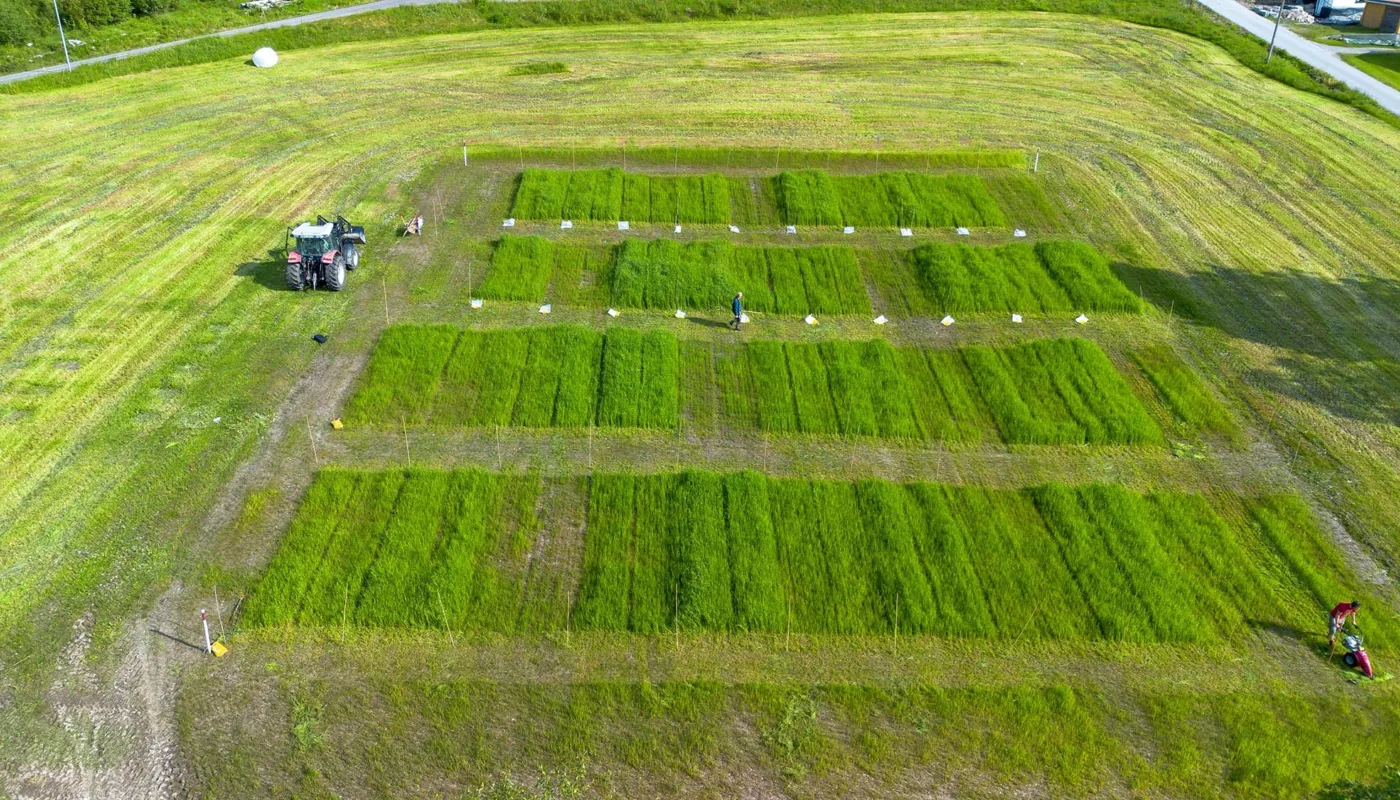
CIRCULANDIA is a European project aiming to transform food systems by integrating regenerative methods in agriculture, local food production, and reusable packaging into a more circular system. It addresses climate change, resource depletion, and waste by focusing on closing the cycle of nutrients, residual raw materials and shortening various value chains. Through collaboration between countries, regions, researchers, and practitioners, more circular solutions will be developed in demonstration sites and adapted in replication areas, enabling scalable impact, knowledge sharing, and resilient urban–rural connections across Europe. With Møre og Romsdal county and Gjermundnes Upper Secondary School as a demo area, NORSØK will work with regenerative methods in agriculture, nutrient management, soil carbon and local food systems. Gjermundnes Upper Secondary School will contribute to the project as a pilot arena for education and hands-on field trials.
Key contributions include:
- Assessment of regenerative agriculture frameworks:
Systematic mapping and evaluation of existing methodologies, tools, and criteria in collaboration with European partners, identifying gaps and harmonisation needs. - Local adaptation and capacity building:
Supporting the translation of solutions developed in demonstration sites to Norwegian conditions, including climate, soil, farming systems, and regulatory frameworks. This includes collaboration with regional stakeholders and educational institutions. - Development of tools and guidelines:
Co-creation of handbooks, advisory tools, and modular training programmes for regenerative agriculture and circular nutrient management. - Monitoring, Reporting and Verification:
Testing and validation of satellite-based monitoring systems developed by the Finnish Institute of Meteorology to assess land use changes and estimate carbon fluxes. In Møre og Romsdal, pilot activities will combine remote sensing with ground-based measurements to improve accuracy and comparability.
By active collaboration both locally and internationally, we will provide results and proposal for solutions that are applicable, scalable, and relevant for Nordic and European contexts.
Partners
Norway: Møre og Romsdal County Council;
Finland:
- Clic Innovation Oy
- Baltic Sea Action Group
- Nylands förbund
- Vantaa muncipality
- Espoo muncipality
- Finnish Meteorological Institute
- Vaasa University
- Helsinki University
- Kekkilä-BVB Oy, Growing media
Germany:
- Stadt Freiburg
- Greendelta GMBH
Spain:
Ajuntament de Manacor
Fundacio Catalana per a la Prevencioó de Residus i el Consum Responsible
France: Metropole Europeenne de Lille
Belgium:
- Stad Roselare
- Intercommunale de gestion de l'environnement – Ipalle
- Flanders’ food,
- Mission Zero Academy
- Idea strategische econopmische consulting
- Sonja Wegge
Croatia: Zagrebacki holding DOO
Estonia: City of Tallin
The Netherlands: Recycling Netwerk Van Eco-eco
Project Details
Project details
| Project number: | 101291131 |
|---|---|
| Project staff NORSØK: | Tatiana Rittl, Reidun Pommeresche and Anne-Kristin Løes |
| Funding: | EUs Horizon Europe research and innovation programme |
| Project period: |
Related articles
Local food in Møre and Romsdal: A collaboration project for farmers and chefs
Soil and the term regenerative
Enhancing soil conservation and regenerative practices to maximize carbon storage and minimize greenhouse gas emissions.
Sustainable utilization of MARine resources to foster GREEN plant production in Europe - MARIGREEN