New deal! – for beetle control in the strawberry field
We will evaluate the effectiveness of alternative measures against the strawberry blossom weevil, a pest capable of causing severe crop losses. The project will test two mechanical methods, microbiological control, mass trapping, and risk assessment prior to new planting.

Measures against the strawberry blossom weevil
Strawberry farmers are well aware of the damage caused by the strawberry blossom weevil (Anthonomus rubi); more than half of the crop can be lost, even when chemical plant protection products are used. For organic production, very few control options are available. This highlights the urgent need to identify effective measures that can reduce damage in affected areas.
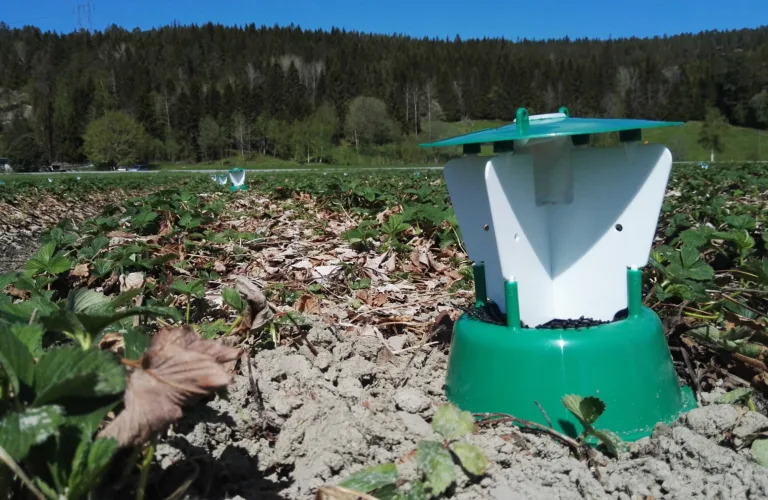
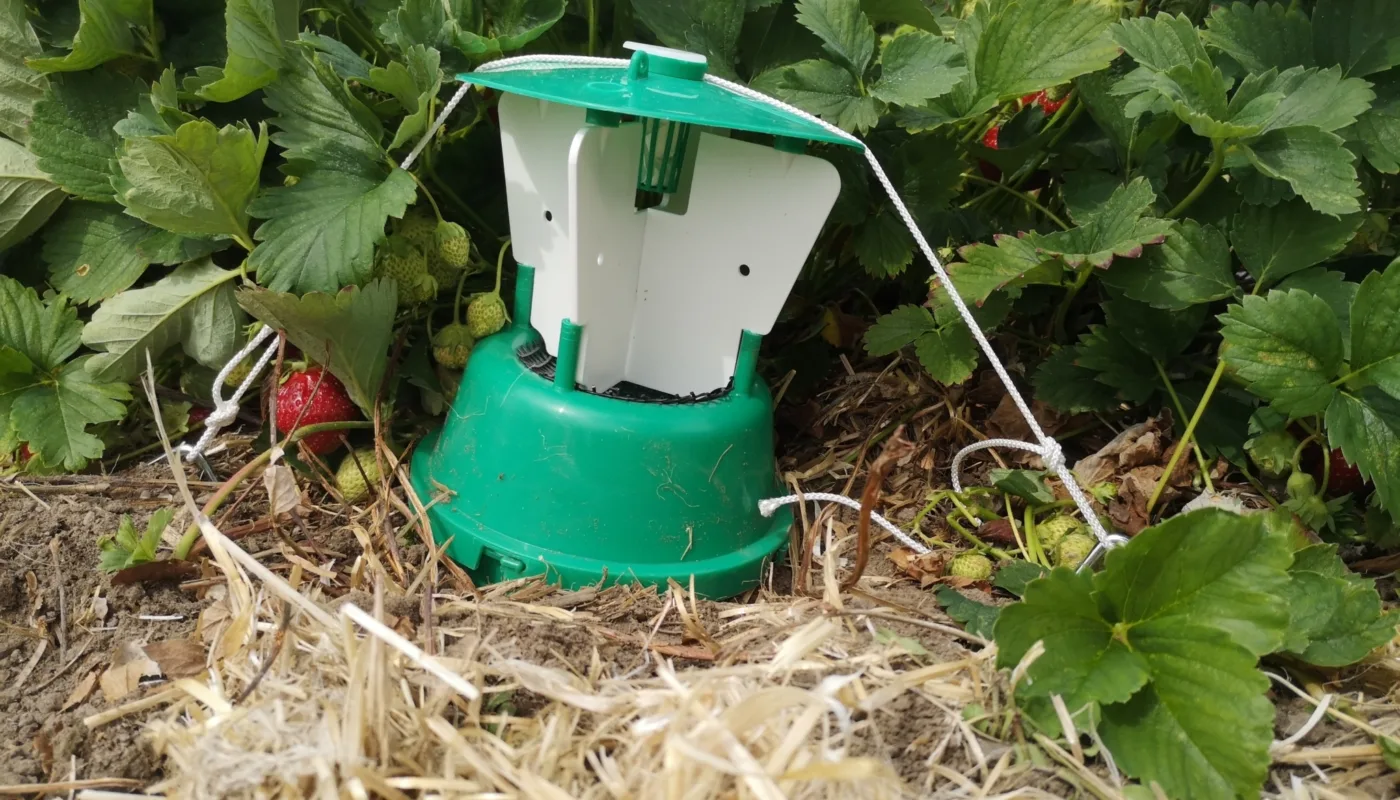
- We will test two mechanical methods: a tractor-mounted “Beetle Vacuum” and a “Beetle Collector.” The Beetle Vacuum, a large tractor-mounted suction device designed to remove strawberry blossom weevils from plants, was developed by a farmer in Valldal. The grower has reported reduced damage after using the vacuum. We will evaluate this method to determine the most effective treatment strategy. The “Beetle Collector” is a device that brushes beetles into a collection unit, and it will be tested in systematic field trials.
- In addition, we will investigate whether beetle populations can be reduced by infecting them with specific fungal spores. Once the spores germinate, the the fungus kills the infected beetles.
- We will also attempt mass trapping in late summer to capture as many beetles as possible in selected fields, with the aim of reducing damage in the following growing season.
Risk assessment prior to new planting may also be an important preventive measure. We will monitor selected crop rotations among strawberry growers with a history of strawberry blossom weevil damage, mapping beetle presence in relevant fields during the year before strawberries are replanted.
Main goal
Although each of these measures may provide some individual benefit, a comprehensive strategy that combines several approaches will likely be necessary to achieve significant reductions in insect damage. Therefore, the primary objective of this project is to develop an integrated, non-chemical strategy to prevent damage caused by the strawberry blossom weevil.
Project Details
Project details
| Project number: | 2025/47292 |
|---|---|
| Project owner: | NORSØK |
| Project coordinator: | Atle Wibe |
| Project partners: | NLR and Norwegian Institute of Bioeconomy Research (NIBIO) |
| Funding: | Norwegian Agriculture Agency |
| Project period: |
Publications
No publications found
Related articles
O3BÆR - Ozonholdig vann for kontroll av gråskimmel i jordbær
FenceTrap - Combined use of alternative measures to reduce insect damage in strawberries