
Light for poultry
The project compiles research on light for poultry and assesses the knowledge in relation to Norwegian conditions and regulations.
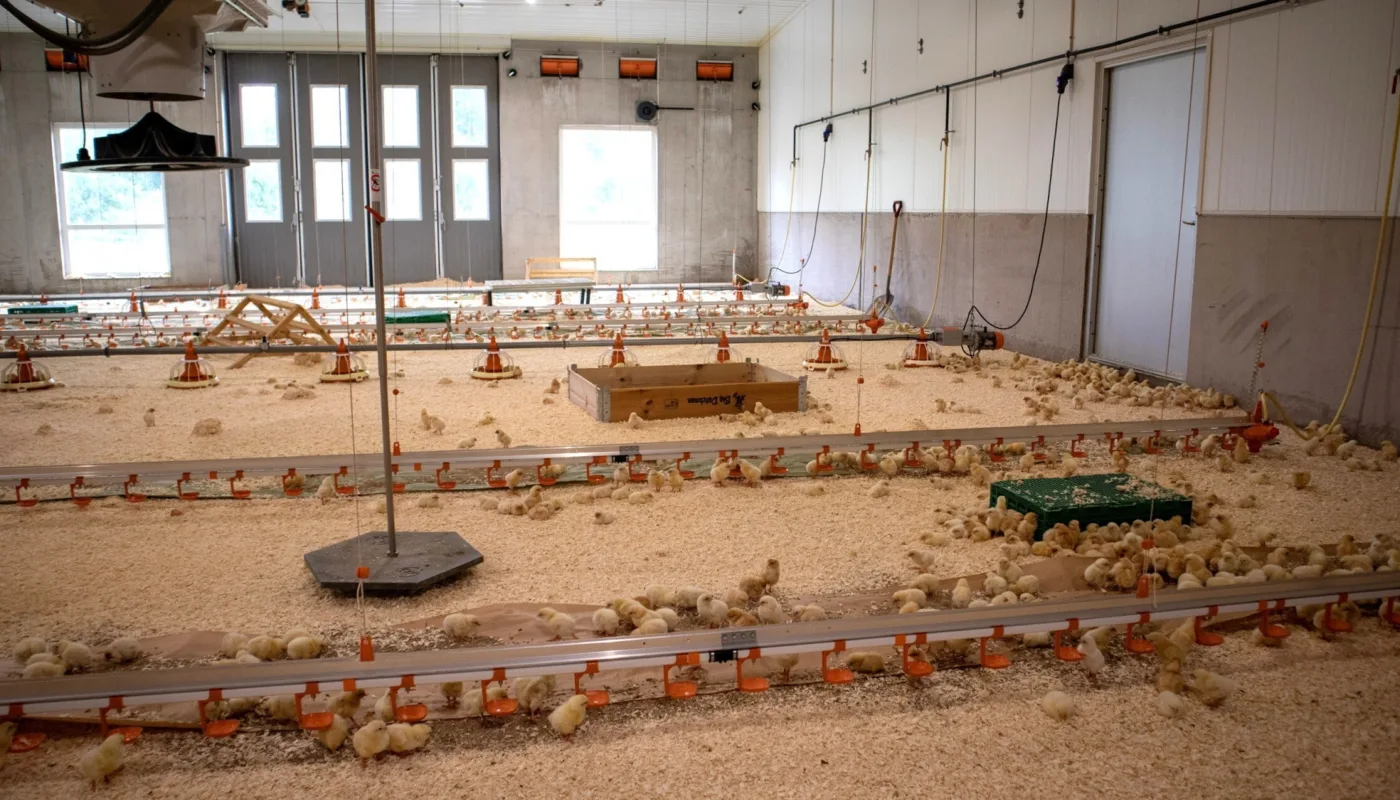

Organic farming regulations require poultry houses to provide «ample» natural light but provide few specific guidelines on what this entails. There is a need for clearer guidance, and recommendations for natural light provision vary between the Nordic countries. In Sweden and Finland, a window area equivalent to 5% of the floor area is recommended, while Denmark has no corresponding recommendation. There is a need for more knowledge about what constitutes sufficient and appropriate access to natural light for different types of poultry under Norwegian conditions.
The main objective of the project is to compile knowledge on how light affects poultry behaviour, health and production, and to assess how natural and artificial light can be designed and used in organic poultry production in Norway to safeguard animal welfare and production-related considerations.
Objectives:
- Retrieve material from previous projects involving farm visits to organic poultry farms in Norway and describe producers’ use of light and their experiences with lighting for poultry.
- Map current requirements and recommendations for lighting in organic and conventional poultry production.
- Describe how birds perceive light, and how poultry vision and light perception differ from those of other livestock species.
- Compile knowledge on how different types of poultry and age groups are affected by light.
- Assess how light intensity, day length and light spectrum affect behaviour, health and production, including what may be considered too much or too little light.
- Describe what may be considered a natural light environment for poultry, and what research shows about birds’ preferences for different types and intensities of light.
- Assess how seasonal variations in Norway affect the light environment for poultry and the potential consequences for behaviour, health and production.
The results will be compiled in a NORSØK report.
Project Details
Project details
| Project owner: | NORSØK |
|---|---|
| Project coordinator: | Rosann Johanssen |
| Funding: | Norwegian Food Safety Authority |
| Project period: |