NORSØK joins major European initiative for circular food systems: CIRCULANDIA
How can we connect urban and rural areas – both in practice and within nature's own cycles? That is the core question driving CIRCULANDIA, a new European collaborative project aimed at developing and testing solutions for regenerative agriculture and circular economy.
The project aims to link the value chains for local food production, organic waste, and packaging – making them circular and economically viable.
European collaboration – from demonstration to regional rollout
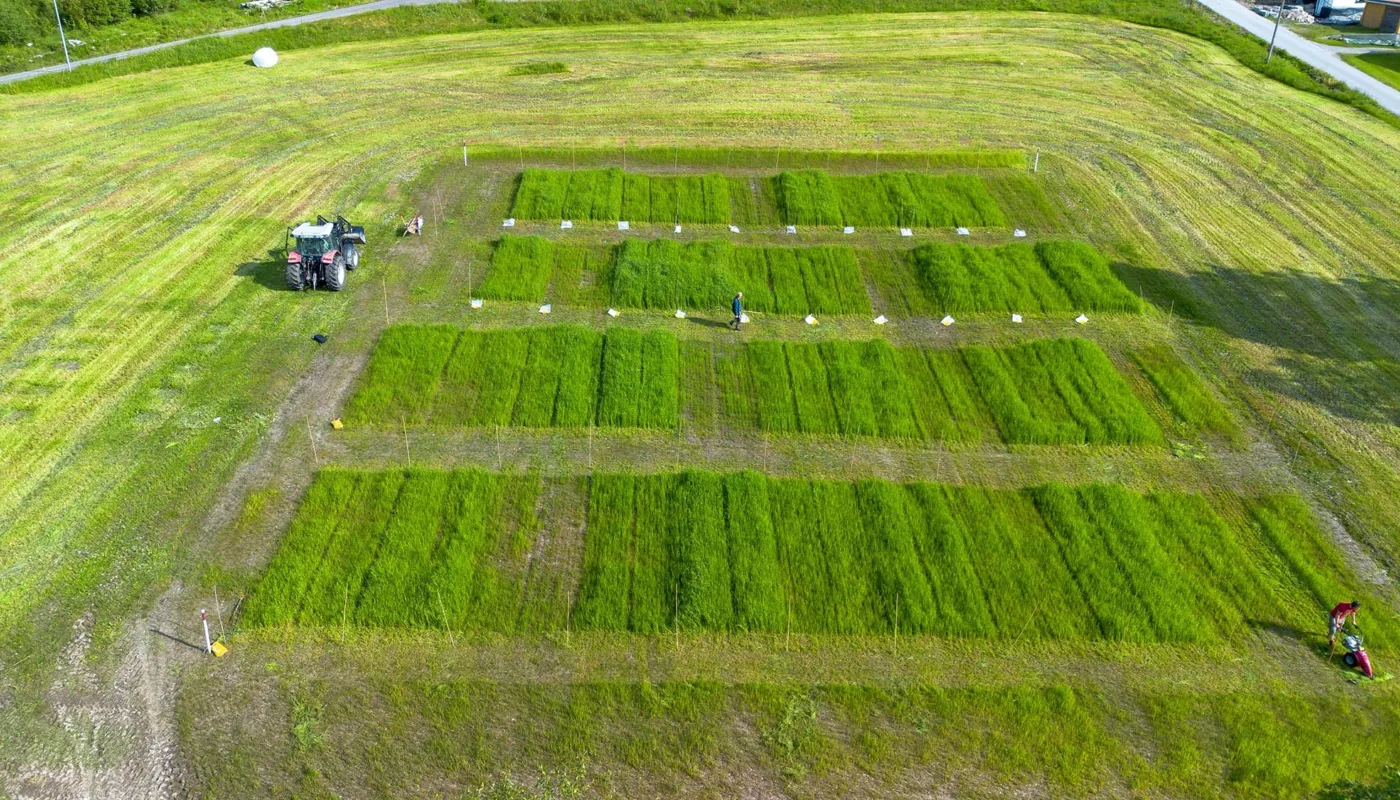
CIRCULANDIA is structured as a European "learning system". Some locations act as demonstrators (where solutions are developed and tested first), while others serve as replicators (where solutions are adapted and put to use in new contexts). NORSØK is responsible for adapting knowledge to local conditions in the region Møre og Romsdal, so that more resources within local food production can be recycled and contribute to new value creation.
Where does NORSØK fit in? Our role in CIRCULANDIA
Mapping and evaluation of regenerative methods
One of the first major work packages involves systematising and comparing existing frameworks and tools for regenerative agriculture – both in Europe and internationally. Here, NORSØK contributes alongside the Finnish Baltic Sea Action Group (BSAG)
- Criteria and assessment systems
- Tools for advisory services and implementation
- Where gaps, overlaps, or needs for harmonisation exist
- What works best across different countries, production types, and value chains
This is important because regenerative agriculture today often consists of many good initiatives – but unclear shared definitions and inconsistent documentation. The project aims to support more precise practice and better comparability.
Knowledge from Europe to Møre og Romsdal
Møre og Romsdal County Council will work on introducing methods and models from European partners into a Norwegian context.
Here, NORSØK will:
- Support the adaptation and testing of regenerative models and nutrient management solutions
- Contribute to the development of courses and training, in collaboration with a local agricultural college
- Connect experiences from European demonstrations to practical regional implementation
This is not about "copying" Finland or France. It is about translating solutions. Climate, soil, farm structures, value chains, regulations, and geography are different – and must be taken seriously.
Tools, handbooks, and training
CIRCULANDIA will develop concrete tools for use by municipalities, advisory services, farmers, and industry stakeholders. Several of the key ones are linked to NORSØK:
- Handbooks on regenerative agriculture tailored to local conditions
- Tools and guidelines for circular nutrient management
- A modular training programme for regenerative farming
Measuring climate emissions from space
CIRCULANDIA places great emphasis on being able to document the climate effects of regenerative agriculture in a more precise and scalable way. The project will therefore further develop and test a satellite-based monitoring solution (MRV – monitoring, reporting, and verification) capable of measuring changes in land use and estimating emissions and carbon uptake, including carbon storage in soil.
The satellite measurements will be tested across 100 hectares of agricultural land in Møre og Romsdal, before being verified with ground-based measurements. The goal is to achieve a stronger and more verifiable basis for assessing the climate impact of agricultural measures, whilst also making it easier to track developments over time and compare results across countries.
Turning diversity into a resource
CIRCULANDIA takes a clear systems perspective. Transitions to more sustainable methods happen faster and have greater impact when agronomy, markets, municipalities, and policy develop in the same direction.
The project therefore connects regenerative farming and soil health, local food systems and public procurement, reusable packaging and consumer behaviour. Not least, it tests solutions across regions and European networks. This is precisely where the strength of European collaboration lies – when multiple regions test solutions in parallel, we can learn what actually works, what needs to be adapted, and how measures can be scaled.
Related articles
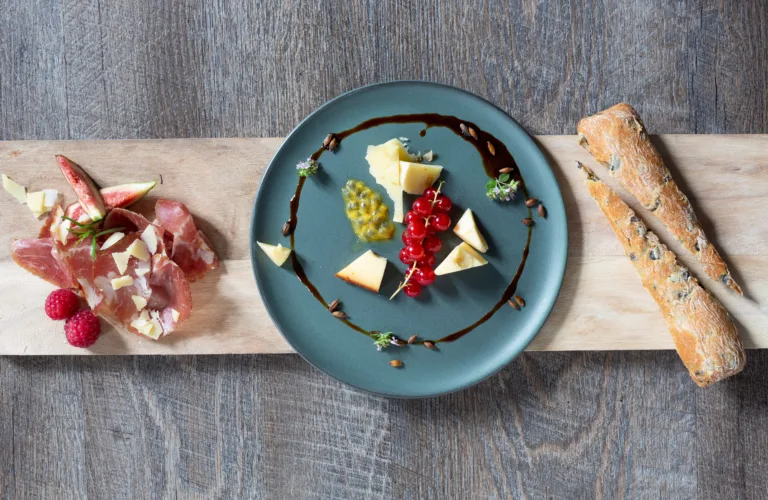
Local food in Møre and Romsdal: A collaboration project for farmers and chefs
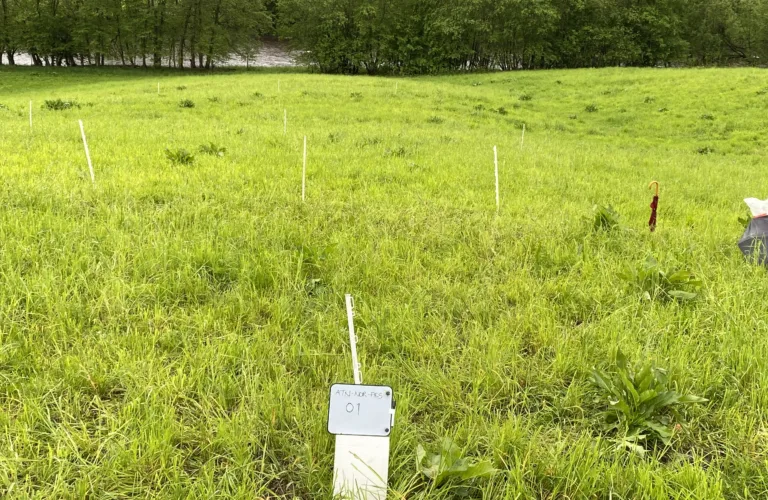
Soil and the term regenerative
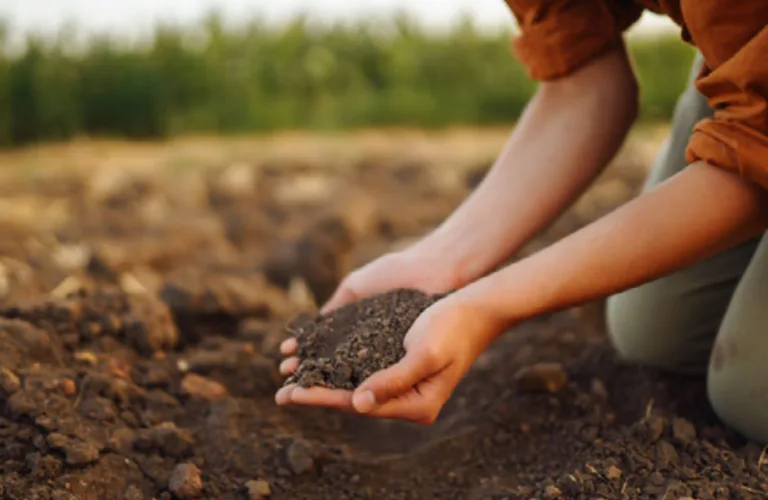
Enhancing soil conservation and regenerative practices to maximize carbon storage and minimize greenhouse gas emissions.
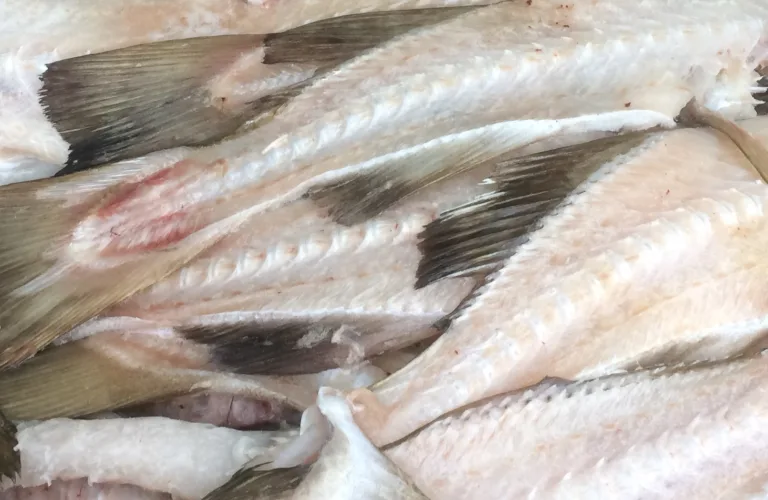
Sustainable utilization of MARine resources to foster GREEN plant production in Europe - MARIGREEN